
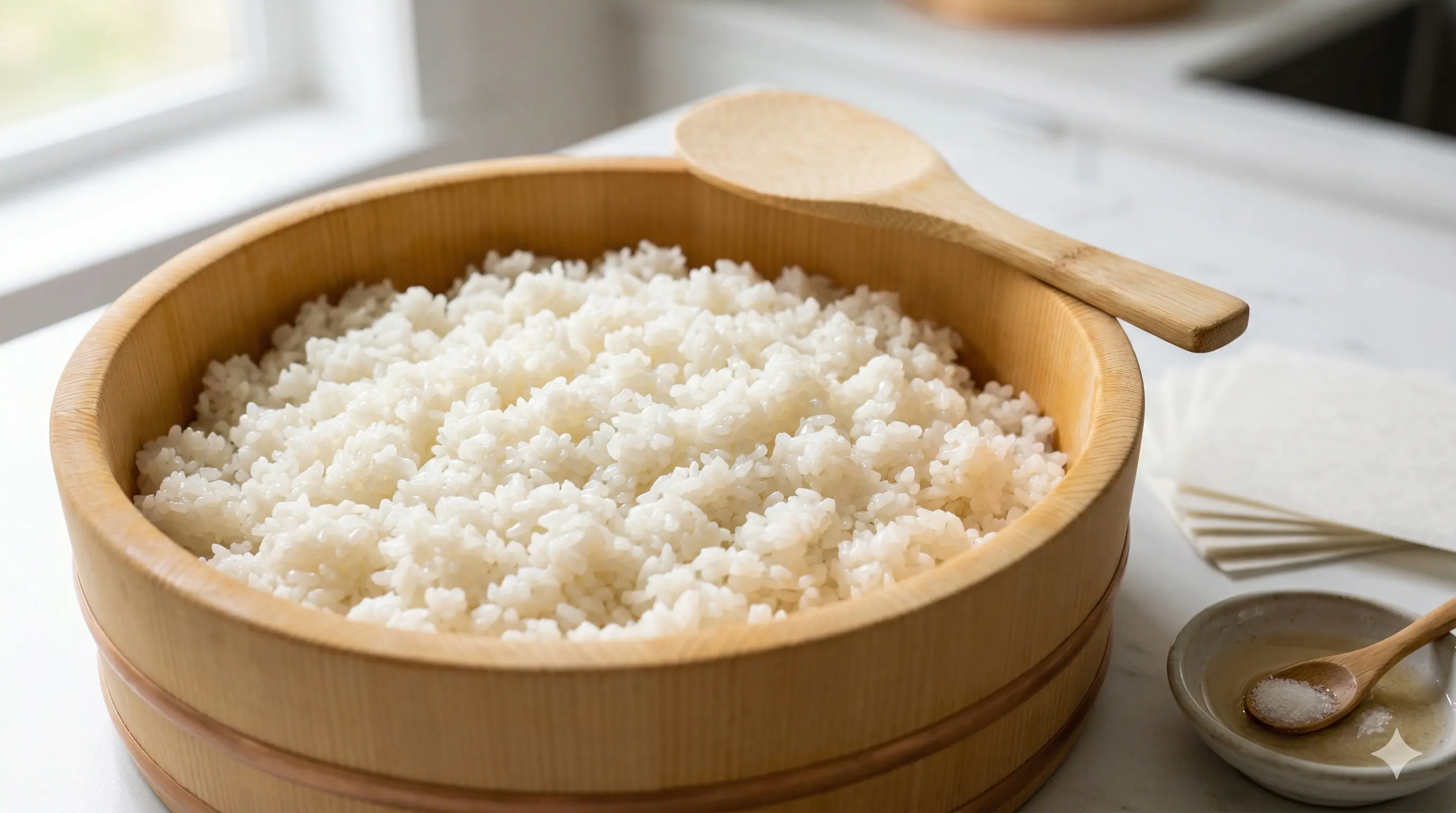
Many people think the most important part of sushi is the fish. While fresh seafood is vital, a true sushi master will tell you that the soul of the dish is actually the rice (known as Shari). If the rice isn’t seasoned and textured perfectly, even the most expensive Bluefin Tuna won’t save the meal.
If you want to understand the craft—or try it in your own kitchen—here is how the perfect sushi rice is made.
1. Choosing the Right Grain
You cannot use long-grain Basmati or Jasmine rice for sushi. You must use short-grain Japanese rice. This variety has a higher starch content, which gives it the “sticky” quality needed to hold its shape without becoming a mushy paste.
2. The “Washing” Ritual
One of the biggest mistakes beginners make is not washing the rice enough.
- Place the rice in a bowl and cover it with cold water.
- Gently swirl it around with your hand. The water will turn cloudy (that’s excess starch).
- Drain and repeat 4 to 5 times until the water runs completely clear.
3. The Science of the Soak
Before turning on the heat, let the rice sit in the water for at least 30 minutes. This allows the moisture to penetrate the center of the grain, ensuring it cooks evenly. If you skip this, the outside will be soft while the inside remains hard.
4. Crafting the “Sushi Su” (Vinegar Seasoning)
While the rice is steaming, you need to prepare the seasoning. For every 2 cups of raw rice, you typically need:
- 1/4 cup Rice Vinegar
- 2 tablespoons Sugar
- 1 teaspoon Salt
Heat these in a small pan until the sugar dissolves, but do not let it boil. Boiling changes the acidity and ruins the delicate flavor.
5. The “Hangiri” Technique
Once the rice is cooked, don’t just dump the vinegar in. In a traditional Japanese kitchen, a wooden tub called a Hangiri is used. The wood absorbs excess moisture, preventing the rice from getting soggy.
As you pour the vinegar over the hot rice, use a “cutting” motion with a spatula. Do not stir or mash. You want to coat every grain while keeping them separate and intact.
6. The Final Texture
Perfect sushi rice should be served at body temperature. It should have a slight shine (from the vinegar) and should be sticky enough to stay together but airy enough to fall apart easily in your mouth.