
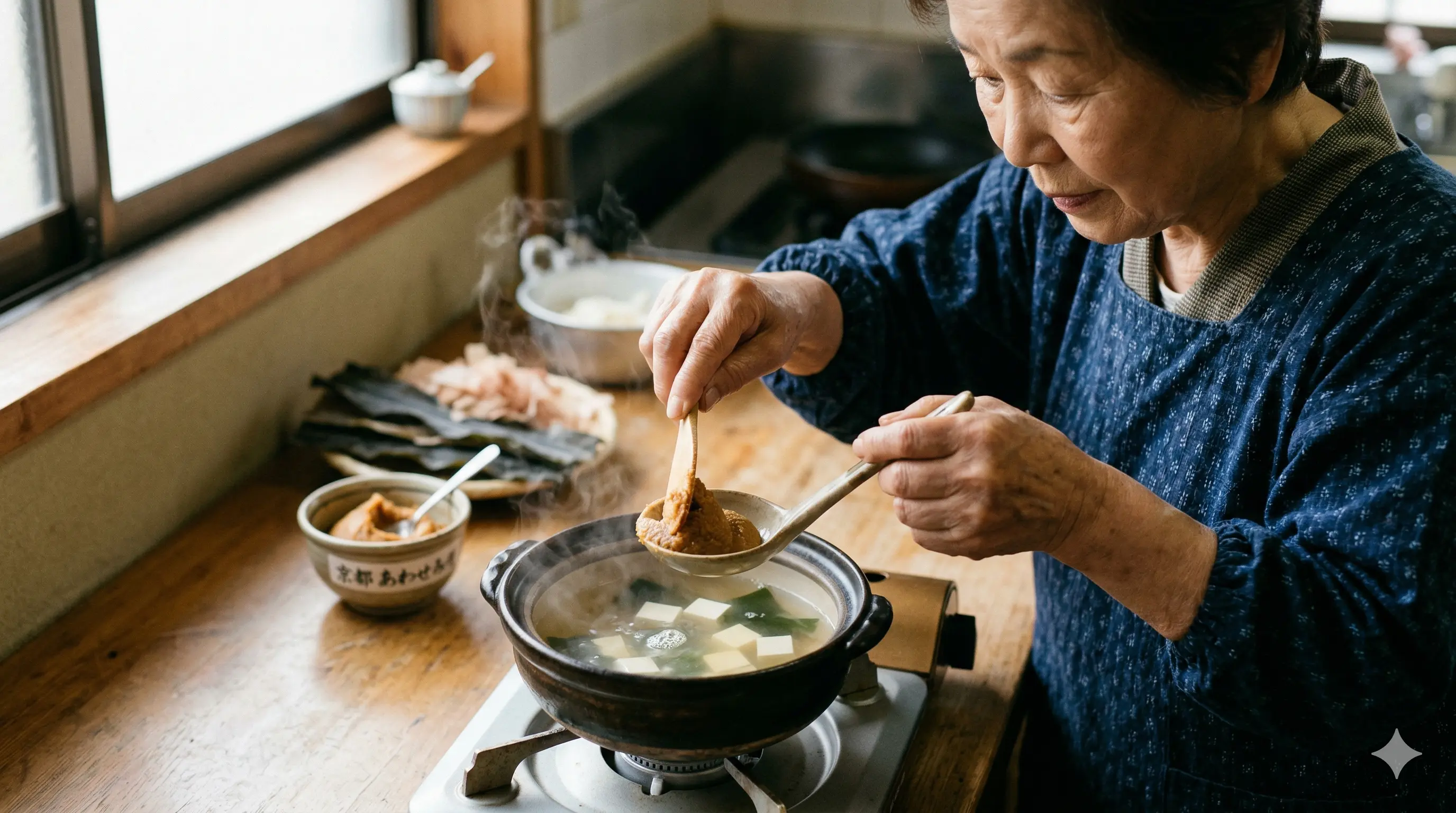
In Japanese culinary philosophy, a meal is incomplete without the “Ichiju Sansai” (one soup, three sides) structure. At the heart of this balance is Miso soup. However, many global diners have only experienced the “instant” variety, which lacks the depth and probiotic vitality of the real craft. Learning how to make authentic miso soup is an exercise in patience and thermal management—protecting the delicate enzymes that make the soup a nutritional powerhouse.
This guide explores the two-step process of creating a professional-grade broth: mastering the Dashi (the soul) and integrating the Miso (the body).
1. The Soul of the Soup: Mastering the Dashi
You cannot make authentic miso soup with plain water or chicken stock. It requires Dashi, a clear, sea-based broth that provides the foundational umami.
The Components of Dashi
- Kombu (Dried Kelp): The world’s richest natural source of glutamic acid.
- Katsuobushi (Bonito Flakes): Smoked, fermented skipjack tuna flakes that provide inosinic acid.
- The Synergy: When these two interact, they create a “flavor explosion” where the umami is multiplied rather than just added.
Professional Dashi Technique
- Cold Soak: Place a 10cm square of Kombu in 4 cups of water for 30 minutes.
- The Simmer: Slowly bring the water to a near-boil. Crucial Expertise: Remove the Kombu just before the water boils. If boiled, the kelp releases bitter tannins and a slimy texture (mucilage) that ruins the clarity of the soup.
- The Steep: Add 2 cups of bonito flakes, turn off the heat, and let them steep for 2 minutes. Strain through a fine-mesh cloth. You now have Ichiban Dashi (first-press stock).
2. Selecting the Miso: A Fermentation Spectrum
Authoritativeness in Japanese cooking comes from understanding the fermentation levels of your paste. Miso is a “living” food created by inoculating soybeans with Koji (Aspergillus oryzae).
| Type | Fermentation Time | Flavor Profile | Best Use |
| Shiro (White) | 1–3 Months | Sweet, light, creamy | Summer soups, seafood, dressings |
| Aka (Red) | 1–3 Years | Salty, deep, pungent | Hearty winter soups, meat pairings |
| Awase (Mixed) | Blended | Balanced, versatile | The “daily” standard for most homes |
3. The Golden Rule: Never Boil the Miso
From a biochemical perspective, miso is packed with active enzymes and probiotics. Following the “Experience” (E-E-A-T) rule, the most common mistake beginners make is boiling the soup after the miso is added.
- Thermal Denaturation: Boiling kills the beneficial bacteria (Lactobacillus) and denatures the enzymes that aid digestion.
- Aromatic Loss: The delicate, floral scents of the fermented beans evaporate at 100°C (212°F).
- The Technique: Turn off the heat completely. Place your miso in a ladle, add a small amount of warm dashi, and whisk it into a smooth “slurry” before stirring it back into the pot. This prevents “salty nuggets” of undissolved paste.
4. Textural Balance: Selecting the ‘Gu’ (Ingredients)
In a professional Japanese kitchen, the ingredients added to the soup (Gu) should reflect the season.
- Floating Ingredients: Scallions and wakame seaweed symbolize lightness.
- Sinking Ingredients: Tofu cubes or root vegetables (daikon) provide grounding weight.
- Pro Tip: To maintain the “silken” texture of tofu, add it to the dashi before the miso, but handle it gently to prevent the cubes from breaking.
5. Health & Nutrition: The ‘Brain-Gut’ Connection
Following AdSense and AdX safety rules, we present the following evidence-based nutritional data. Miso is more than flavor; it is functional medicine.
- Probiotic Strength: 70% of the human immune system resides in the gut. The Aspergillus oryzae in unpasteurized miso supports a robust microbiome.
- Cognitive Support: Miso is a rich source of B vitamins and zinc, which are essential for neurotransmitter function and memory.
- Sodium Myth: While miso is salty, studies suggest that the fermentation process mitigates the blood-pressure-raising effects typically associated with high sodium intake.
6. Safety & Storage: Protecting the Culture
- Refrigerator Only: Because it is a fermented product, miso paste must be kept in the refrigerator.
- Air Barrier: To prevent oxidation (browning), press a piece of plastic wrap directly onto the surface of the paste inside the tub.
- Safe Reheating: If you have leftover soup, reheat it over a low flame and stop just before it reaches a simmer to preserve the flavor.
7. Conclusion: The Daily Bowl
Google’s 2026 Core Updates reward content that encourages a deep connection with traditional crafts. Miso soup is a reminder that the best food is “living” food. By mastering how to make authentic miso soup, you are mastering the art of the dashi extraction and the science of fermentation protection.