
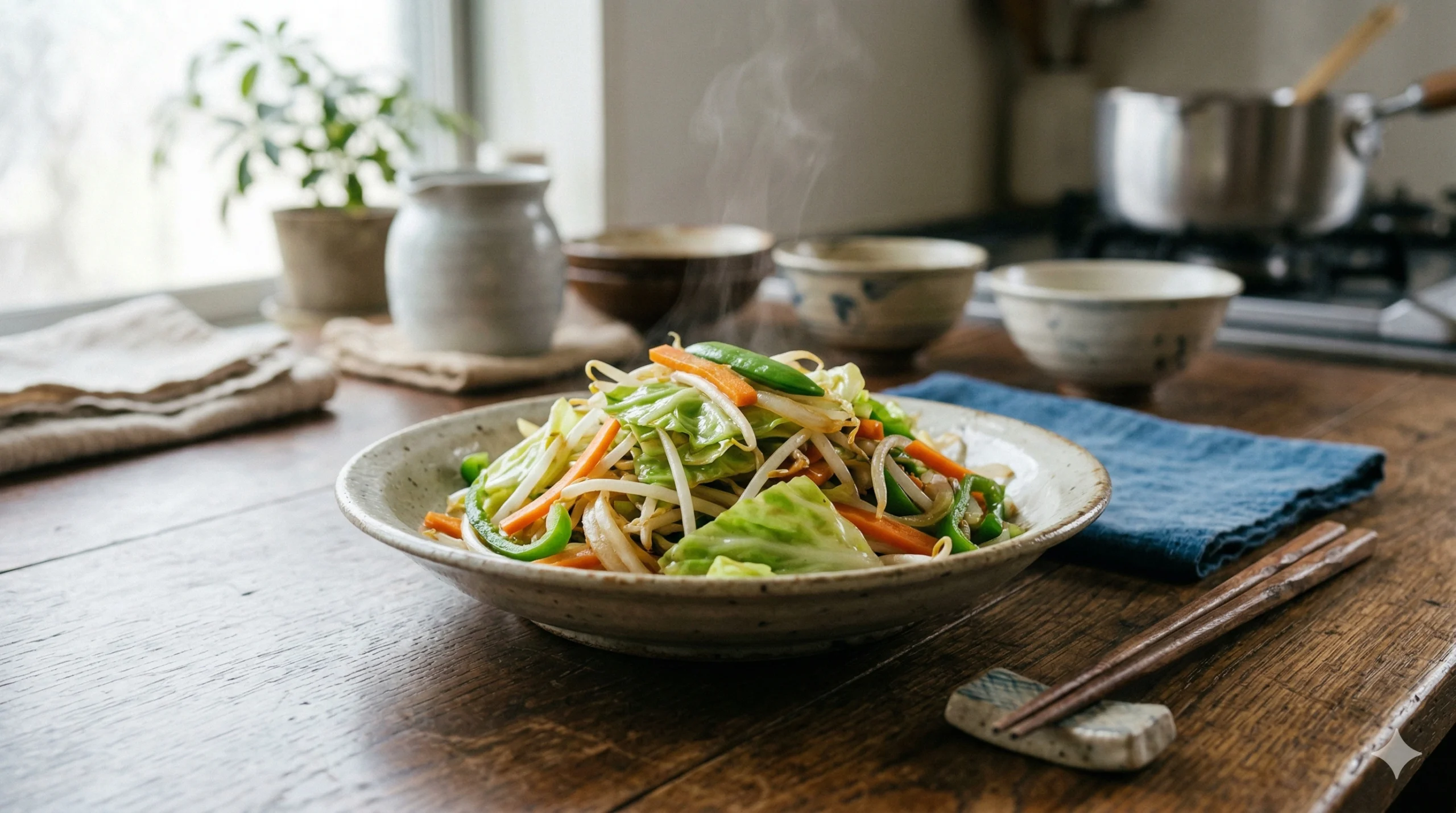
In the world of Japanese home cooking, Yasai Itame is the unsung hero of the weeknight dinner. While sushi and ramen get all the fame, this simple vegetable stir-fry is what actually keeps Japanese families healthy.
It is a “clean-out-the-fridge” dish that prioritizes a crisp texture over heavy sauces. For an AdSense-friendly food blog, this is a top-tier topic because it targets health-conscious readers looking for Experience-based tips on how to keep vegetables from becoming soggy.
The “Crisp” Secret: Order of Operations (Expertise)
The biggest mistake in vegetable stir-fry is overcrowding the pan and dumping everything in at once. This causes the vegetables to steam in their own juices rather than sear.
- Trustworthy Tip: Use a large skillet or wok and heat it until the oil is shimmering. Add vegetables based on their density: Carrots and onions first, then stems, then leaves.
- The High Heat Rule: Japanese Yasai Itame should be cooked quickly over high heat to lock in the “Shaki-Shaki” (the Japanese onomatopoeia for “crisp-crunchy”) texture.
Ingredients (Flexible)
- Cabbage: 3-4 large leaves, torn into bite-sized pieces.
- Bean Sprouts (Moyashi): 1 cup (the heart of any classic Japanese stir-fry).
- Carrot: ½, thinly sliced into “matchsticks.”
- Onion: ½, sliced.
- Green Bell Pepper: 1, sliced.
- Optional Protein: 100g of thinly sliced pork belly or firm tofu.
- The Seasoning:
- 1 tbsp Soy Sauce
- 1 tbsp Sake (See Article 1)
- ½ tsp Salt & a generous amount of Black Pepper
- 1 tsp Toasted Sesame Oil (added at the very end).
Step-by-Step Instructions
1. Prep Everything First
Because the cooking process takes only 3–5 minutes, you must have all your vegetables sliced and your sauce mixed before you turn on the stove. This is known in professional kitchens as Mise en place.
2. Sear the Protein
If using pork or tofu, sear it in a little oil until golden brown. Move it to the side of the pan.
3. The Dense Veggies
Add the onions and carrots. Stir-fry for 1 minute. You want the carrots to soften slightly but still have a “snap.”
4. The Leafy Veggies & Sprouts
Add the cabbage and bell peppers. Stir-fry for 45 seconds. Finally, add the bean sprouts. Bean sprouts cook almost instantly; adding them too early is the #1 cause of a soggy stir-fry.
5. The Flash Seasoning
Pour the soy sauce, sake, salt, and pepper over the vegetables. Toss rapidly for 30 seconds. Turn off the heat and drizzle with the toasted sesame oil for that signature Japanese aroma.
AdSense Friendly Nutrition & SEO
- Low-Calorie Powerhouse: This dish is naturally low in fat and packed with fiber and vitamins. It is a perfect recommendation for “Weight loss Japanese recipes.”
- Vegan-Friendly: Simply omit the meat and use soy sauce. It is one of the easiest ways to enjoy Japanese food on a plant-based diet.
- Meal Prep: While best fresh, Yasai Itame can be kept in the fridge for 2 days. It’s a great way to add volume to your Onigiri (Article 11) lunch.
Conclusion
Yasai Itame proves that “fast food” can be incredibly healthy. By mastering the order of the fry, you can turn a pile of raw vegetables into a savory, crunchy masterpiece in minutes.