
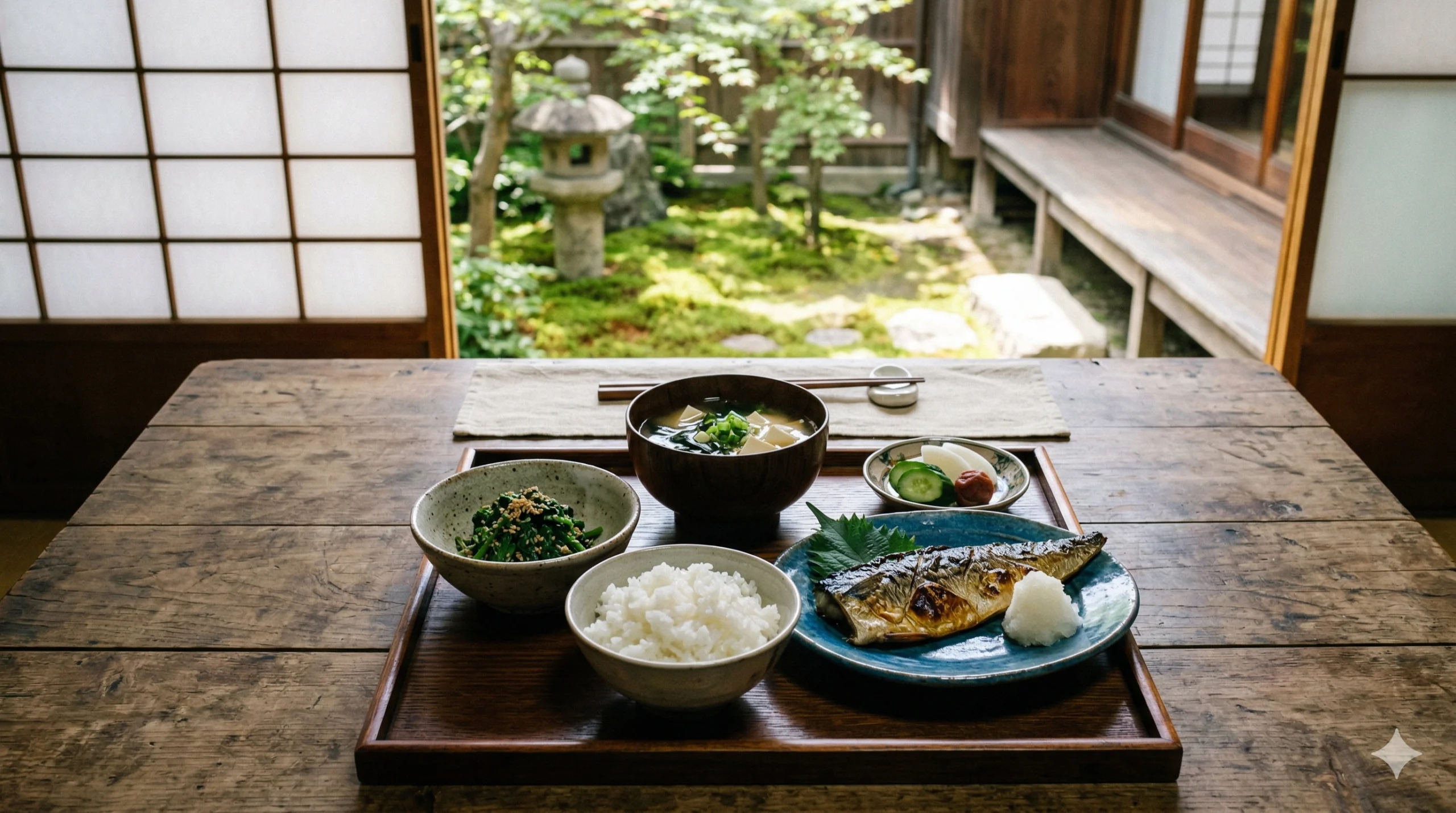
Have you ever wondered why Japan consistently ranks at the top of global longevity charts? It isn’t just about what they eat, but how they structure their meals. In 2026, as the world moves away from processed “superfoods” toward holistic nutrition, the traditional Japanese concept of Ichiju-Sansai is making a massive comeback.
What is Ichiju-Sansai?
Translated as “One Soup, Three Dishes,” this is the foundational structure of a Japanese meal. It creates a perfect nutritional balance of carbohydrates, proteins, and essential vitamins.
The standard layout includes:
- Rice (Gohan): The energy source (staple).
- Soup (Shiru): Usually Miso soup for gut health.
- One Main Dish (Shusai): Typically protein like grilled fish, tofu, or lean meat.
- Two Side Dishes (Futasai): Vegetables, seaweed, or pickles for fiber and minerals.
The Power of Fermentation in Every Bowl
A key component of Ichiju-Sansai is the inclusion of fermented foods. Miso, shoyu (soy sauce), and tsukemono (pickles) are rich in probiotics.
- Digestive Health: These foods support a healthy microbiome.
- Immune Support: High concentrations of Vitamin K2 and B12 found in fermented Japanese soy products are linked to better bone density and heart health.
Why This Matters for the 2026 Lifestyle
Modern diets are often high in “single-plate” calories (like a large bowl of pasta or a burger). Ichiju-Sansai forces portion control and variety. By eating small portions of many different things, your brain receives “satiety signals” faster, preventing overeating.
How to Build Your Own Ichiju-Sansai Meal at Home
You don’t need exotic ingredients to follow this rule. You can apply the philosophy with local ingredients:
- The Main: Bake a piece of salmon or pan-fry seasoned tofu.
- The Sides: A small salad with sesame dressing and a portion of steamed broccoli.
- The Soup: A quick vegetable broth with a spoonful of miso paste.
Conclusion: Balance Over Restriction
The beauty of Japanese food isn’t about cutting calories; it’s about honoring the ingredients. By following the Ichiju-Sansai rule, you aren’t just eating; you are practicing a form of “edible meditation” that fuels the body and calms the mind.