
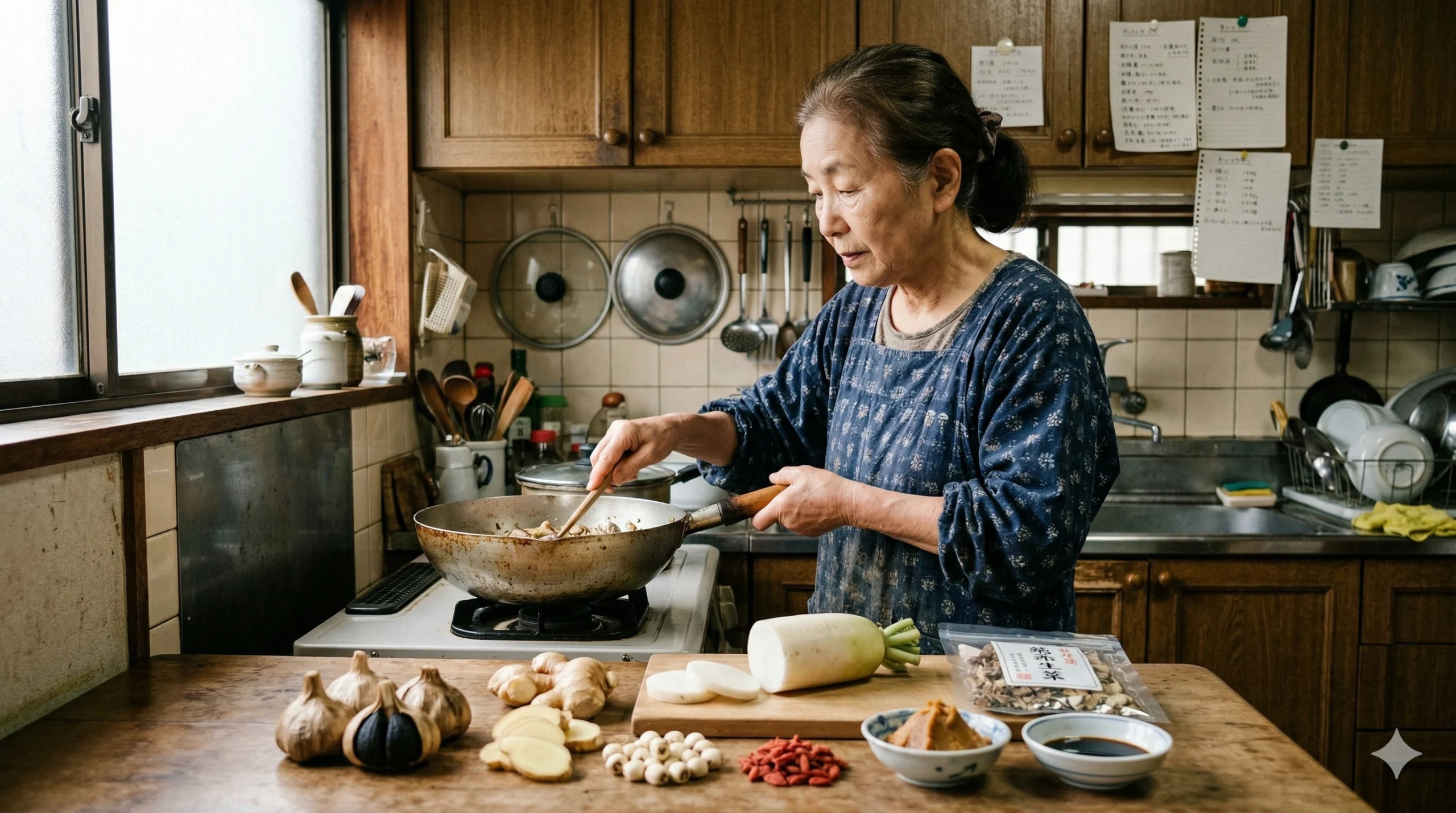
In a world increasingly dominated by synthetic supplements, the 2026 wellness trend is shifting backward toward ancient wisdom. Yakuzen, the Japanese art of medicinal cooking, is gaining global traction. Unlike a standard “diet,” Yakuzen is a personalized approach to eating that treats food as a form of preventative medicine.
Whether you are battling fatigue, seasonal allergies, or low focus, the ingredients found in a traditional Japanese pantry might be the most powerful tools in your cabinet.
What Exactly is Yakuzen?
Yakuzen (薬膳) literally means “medicinal meal.” It is the Japanese adaptation of Traditional Chinese Medicine (TCM), blending the theory of Yin and Yang with the five elements. The core belief is that your body’s needs change based on the season and your internal state.
- Warming Foods: Increase circulation and energy (e.g., Ginger, Green Onions).
- Cooling Foods: Reduce inflammation and calm the body (e.g., Cucumber, Daikon Radish).
- Neutral Foods: Provide stable foundation (e.g., Rice, Soybeans).
High-Energy Ingredients for the Modern Professional
If you are looking for a natural alternative to caffeine spikes, Japanese medicinal cooking offers “slow-release” energy through specific functional foods:
- Daikon Radish (The Great Detoxifier): High in digestive enzymes like diastase, daikon helps the body break down heavy proteins and fats, preventing the “after-lunch slump.”
- Ginger (Shoga): A staple for “Qi” (energy) flow. It warms the core, improves blood flow to the brain, and sharpens mental clarity.
- Black Garlic (Kuro-Ninniku): A fermented powerhouse. In Yakuzen, black garlic is used to strengthen the immune system and provide a steady stream of antioxidants that fight fatigue.
- Matcha (More than a Latte): The L-theanine in matcha provides a “calm alertness” that prevents the jitters associated with coffee.
The 2026 Fusion Twist: Western Ingredients, Eastern Philosophy
You don’t need a 100% Japanese menu to practice Yakuzen. The modern “Fusion Yakuzen” movement applies these principles to everyday meals:
- Example: Adding Miso to a sweet potato soup to combine the grounding power of root vegetables with the gut-healing probiotics of fermented soy.
- Example: Topping your morning avocado toast with Umeboshi (Pickled Plum) to add an alkaline kick that balances blood pH levels.
Conclusion: Listening to Your Body
The ultimate goal of Yakuzen is to become your own healer. By observing how your body reacts to the temperature and flavor of your food, you can curate a menu that doesn’t just fill your stomach but restores your vitality. In 2026, the most sophisticated bio-hack isn’t a chip—it’s a well-chosen bowl of medicinal soup.