
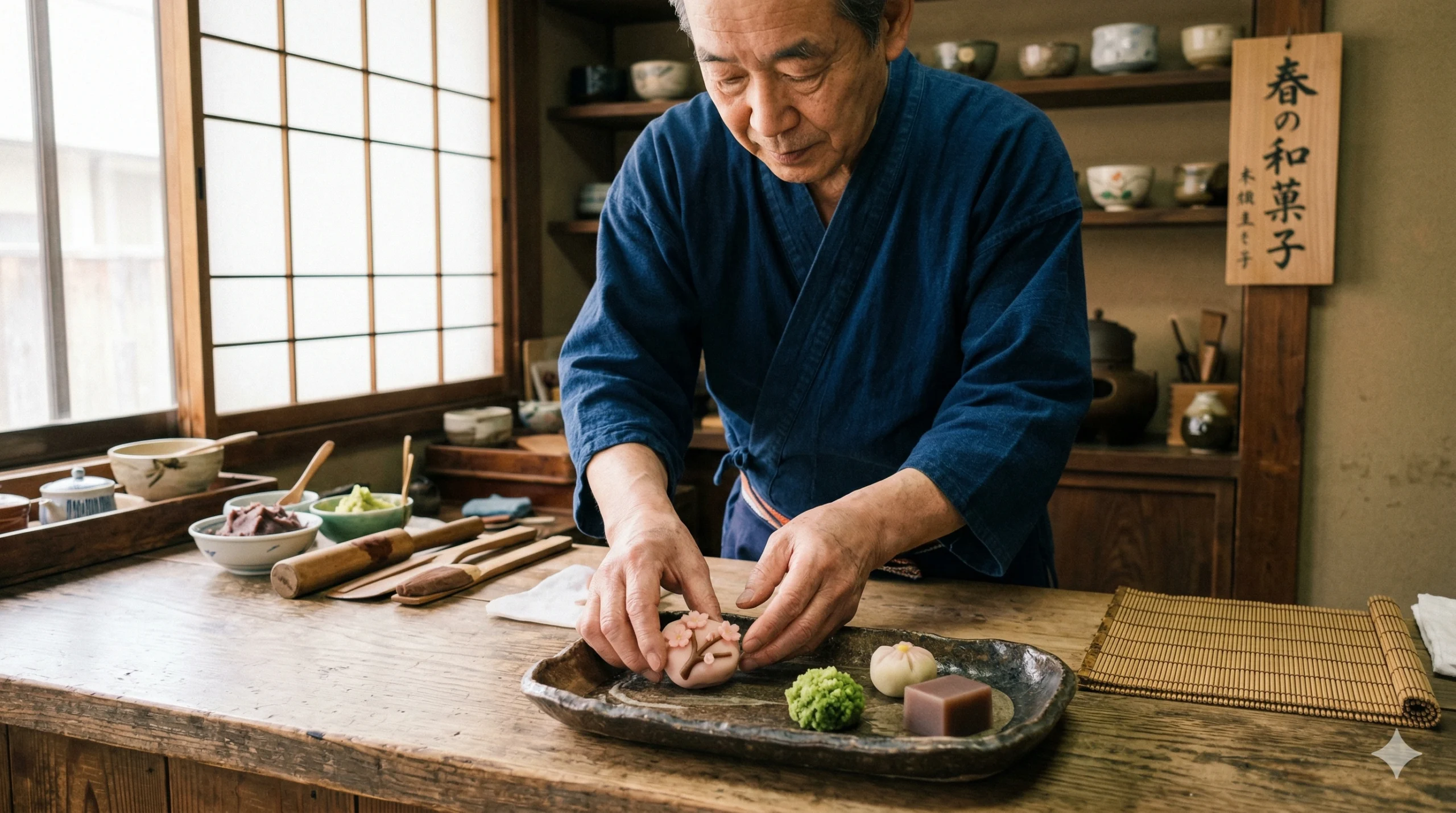
In the high-speed world of 2026, the global dessert market is seeing a massive shift. People are moving away from heavy, calorie-dense cakes toward “Mindful Confections.” Leading this charge is Wagashi, the traditional Japanese sweets often served with green tea.
Unlike Western desserts that rely on butter, cream, and high-fructose corn syrup, Wagashi is a plant-based art form that prioritizes texture, natural sweetness, and the psychology of satisfaction
The Anatomy of a Healthy Sweet
The primary ingredients of Wagashi are a nutritionist’s dream compared to typical processed snacks. Most varieties are made from:
- Azuki Beans (Red Bean Paste): High in protein, fiber, and potassium.
- Mochi (Rice Flour): Provides a satisfying, chewy texture that slows down the eating process.
- Agar (Kanten): A seaweed-based gelatin that is calorie-free and aids in digestion.
- Natural Fruits and Nuts: Used for seasonal flavoring and decoration.
Because these ingredients are fiber-rich, they have a lower Glycemic Index (GI) than chocolate or donuts, meaning you avoid the sugar crash that leads to afternoon irritability.
The Psychology of “One Bite” Satisfaction
One of the core tenets of Japanese food culture is the beauty of the portion. Wagashi are designed to be small, intricate, and visually stunning. This serves a specific scientific purpose: Sensory-Specific Satiety. When a treat is highly detailed and reflects a specific season (like a cherry blossom in spring or a maple leaf in autumn), you are more likely to eat it slowly and mindfully. In 2026, psychologists are calling this “visual fullness.” By engaging your eyes and your sense of touch, the brain registers “satisfaction” much faster than it would if you were mindlessly snacking on a bag of cookies.
Pairing for Health: The Wagashi and Matcha Connection
Wagashi is rarely eaten alone. It is almost always paired with Matcha (bitter powdered green tea).
- The Science: The bitterness of the tea’s tannins is balanced by the bean paste’s sweetness.
- The Benefit: The catechins in the tea help block some of the sugar absorption, while the sugar in the sweet helps your brain process the caffeine from the tea more smoothly, providing a “clean” energy boost.
Conclusion: Rethinking the Dessert Break
Wagashi teaches us that a treat doesn’t have to be a “guilty pleasure.” It can be a moment of artistic appreciation and nutritional balance. If you’re looking to reduce your sugar intake without sacrificing joy, look toward the forest and fields of Japan for your next afternoon break.