
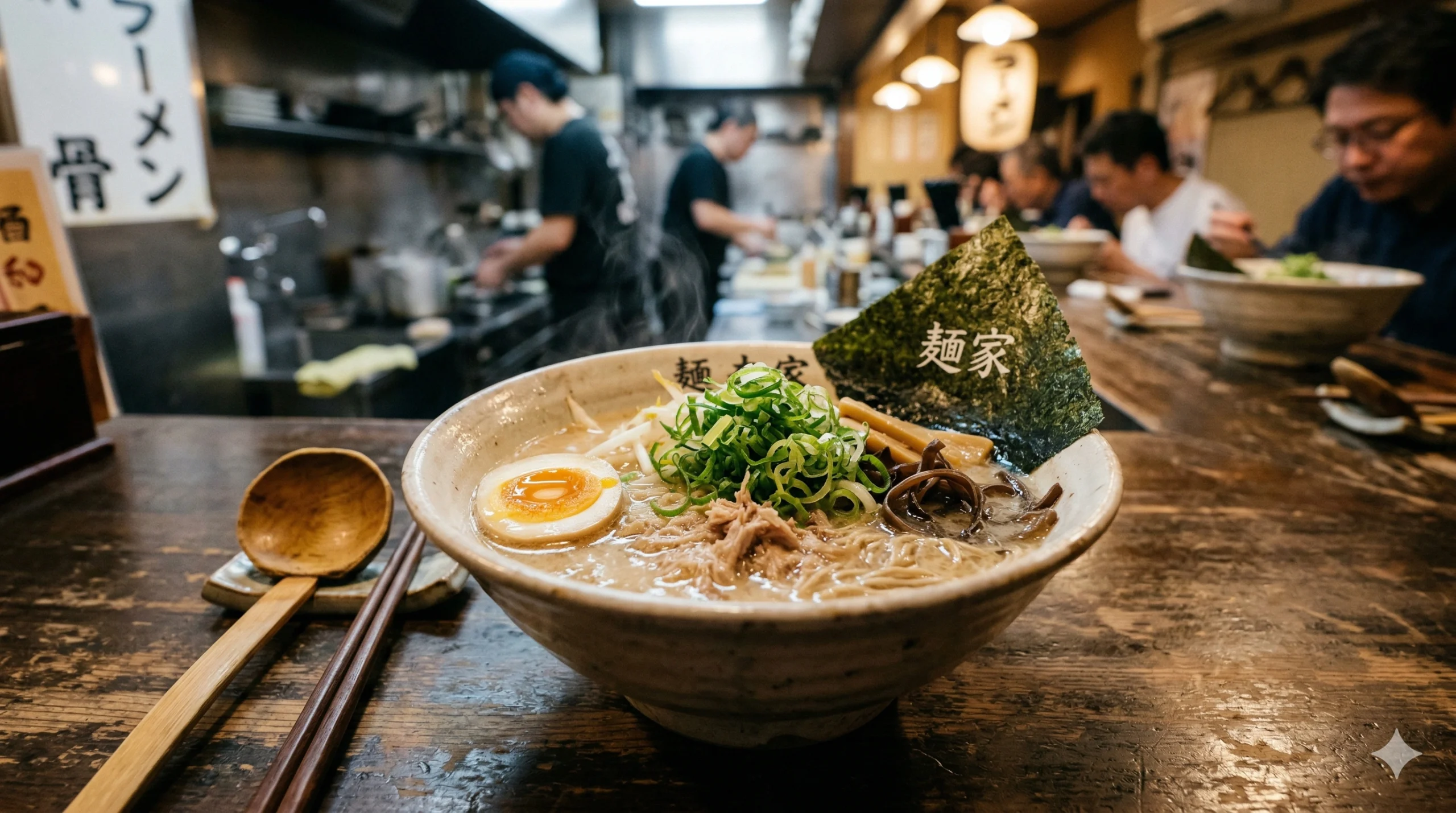
For a long time, the global perception of ramen was limited to plastic-wrapped instant noodles or high-sodium calorie bombs. However, in 2026, the culinary world is witnessing the “Ramen Renaissance.” Traditional ramen is being reimagined not just as comfort food, but as a functional meal packed with bioavailable nutrients, collagen, and essential minerals.
Authentic Japanese ramen—the kind that takes 48 hours to prepare—is a far cry from its processed cousins. When made with traditional methods, a bowl of ramen can be one of the most nutritionally dense meals in your repertoire.
The Anatomy of a Healthy Bowl
To understand why ramen is the new “super-soup” of 2026, we have to look at its four primary components through a nutritional lens:
1. The Broth (The Collagen Foundation)
Whether it is Tonkotsu (pork bone) or Tori Paitan (creamy chicken), authentic broth is made by simmering bones for dozens of hours.
- The Benefit: This process extracts collagen and gelatin, which are vital for gut lining repair, joint health, and skin elasticity.
- The Mineral Boost: Long simmering also releases minerals like calcium, magnesium, and phosphorus in a form that is easy for the body to absorb.
2. The Toppings (Micronutrient Density)
A professional bowl of ramen is a masterclass in variety:
- Ajitsuke Tamago (Marinated Egg): Provides high-quality protein and choline for brain health.
- Menma (Fermented Bamboo Shoots): A great source of prebiotic fiber to fuel a healthy gut.
- Nori (Seaweed): Packed with iodine and trace minerals that support thyroid function.
- Green Onions and Sprouts: Adding fresh enzymes and Vitamin C to balance the rich broth.
3. The Tare (The Seasoning)
Modern ramen chefs in 2026 are using fermented Tare—the concentrated seasoning at the bottom of the bowl—made from high-quality miso or aged soy sauce. As discussed in previous articles, these fermented bases provide probiotics that aid in the digestion of the heavier fats in the soup.
The 2026 Shift: “Lite” Noodles and Low-Sodium Bases
The biggest evolution in 2026 is the emergence of functional noodles. Many high-end ramen shops are now offering:
- Whole Grain & Rye Noodles: These provide a lower glycemic index and higher fiber content than traditional white flour noodles.
- Alkaline Innovation: The “Kansui” (alkaline water) used in ramen noodles doesn’t just give them their chew; it helps stabilize the dough so it can withstand the hot broth without becoming mushy, preserving the texture that encourages mindful chewing.
How to Eat Ramen for Maximum Health
To enjoy ramen like a nutrition-conscious local in Japan, follow these three rules:
- Don’t Drink All the Broth: While the broth is nutritious, it is also high in sodium. Enjoy a few spoonfuls for the collagen, but leave the rest.
- Order Extra Greens: Most shops allow you to double up on spinach, wood-ear mushrooms, or scallions.
- Eat the Protein First: Starting with the egg or pork Chashu helps stabilize your blood sugar before you move on to the carbohydrates in the noodles.
Conclusion: Comfort Without Compromise
Ramen is proof that “healthy” and “satisfying” are not mutually exclusive. By focusing on slow-cooked broths and nutrient-dense toppings, this Japanese staple has earned its place as a pillar of the 2026 wellness diet. It is soul food that feeds the body as much as the spirit.