
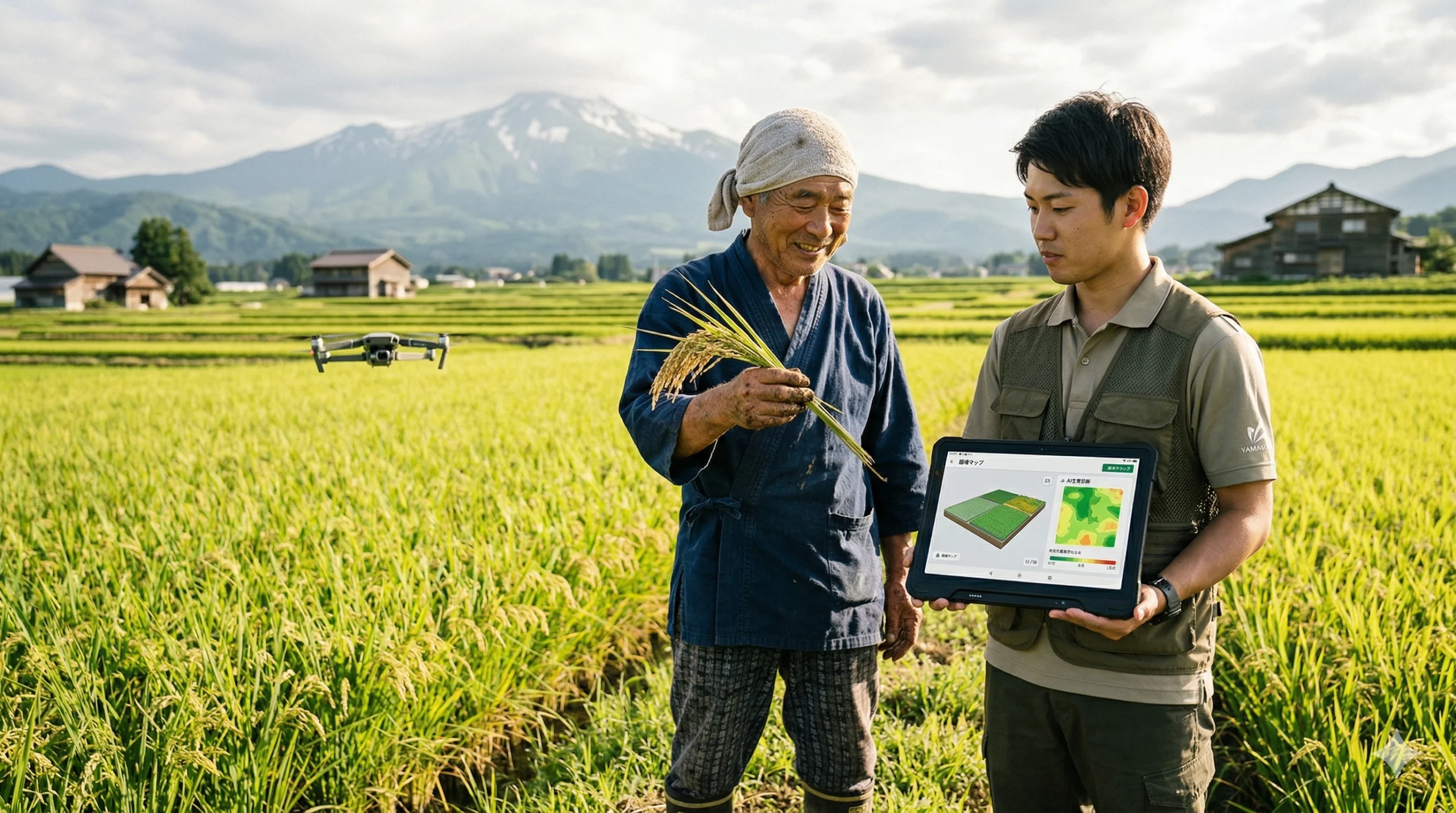
In the Shonai Plain of Yamagata Prefecture, a quiet revolution is taking place. As 2026 brings record-breaking temperatures and shifting rainfall patterns across Asia, Shonai is emerging as a global model for Agricultural Resilience.
By blending ancient heirloom crop wisdom with cutting-edge AI technology, this region isn’t just preserving its heritage—it’s engineering the survival of the world’s most important staple: rice.
1. Protecting “Heritage” in a Changing Climate
The Shonai Plain is famous for premium rice cultivars like Tsuyahime and Haenuki. However, climate change has introduced “chalky grains” and cracked kernels due to extreme heat.
To combat this, Shonai farmers are leading the transition to heat-tolerant rice varieties.
- The Scale: In 2026, over 16% of Japan’s staple rice is now grown using these climate-hardy seeds, a 2.5x increase in just a decade.
- Heirloom Biodiversity: Tsuruoka, within the Shonai region, remains home to over 60 heirloom crops (like the Dadacha soybean). These ancient seeds contain genetic traits that modern science is now using to develop crops that can thrive in 2026’s volatile environment.
2. The AI-Tradition Fusion (Smart Agriculture)
Perhaps the most striking development in 2026 is the cautious but effective integration of Artificial Intelligence into traditional paddy fields.
- Precision Drones: Farmers are using AI-equipped drones to assess soil health and crop stress in real-time. This has reduced pesticide usage by up to 60%, targeting only the areas that truly need it.
- Automated Water Management: New systems have cut labor time by 80%, allowing the shrinking, aging population of farmers to manage larger areas with greater precision.
- Predictive Analytics: Algorithms now predict disease outbreaks before they spread, ensuring that “demand-based production” prevents the waste associated with over-farming.
3. Gastronomy as a Conservation Tool
Shonai was the first region in Japan to be designated a UNESCO Creative City of Gastronomy. This isn’t just a title; it’s a sustainability strategy.
- The “Farm-to-Table” Loop: By creating a high-end market for heirloom rice and vegetables, the region ensures that traditional farming remains economically viable for the younger generation.
- Sake Sustainability: The region’s top-tier sake breweries are now using “Eco-Rice”—grown with 50% less chemical fertilizer—catering to a 2026 global consumer base that demands environmental transparency.
4. Lessons for the Global Food System
The “Shonai Model” provides three critical lessons for the 2026 global food crisis:
- Innovation over Replacement: Technology should enhance human skill, not replace it.
- Diversity is Security: Protecting 60+ heirloom varieties is more secure than relying on a single “super-crop.”
- Regional Pride: When a community values its unique flavors, sustainability becomes a point of pride rather than a regulatory burden.
Conclusion: The Future is Rooted in the Past
The Shonai Plain reminds us that the path to a sustainable future isn’t a straight line forward—it’s a circle. By using AI to protect heritage rice and honoring the “blessings of the mountain” water, Japan is showing the world that we can feed a changing planet without losing our soul.