
As the world grapples with the environmental challenges of 2026, the global sustainability movement is looking toward a single Japanese word: Mottainai. Often translated as “what a waste,” the term actually carries a much deeper spiritual meaning—it is the sense of regret when the “soul” of an object or ingredient is not fully respected.
In the kitchen, Mottainai is the antithesis of modern “throwaway” culture. It is a creative, gourmet approach to zero-waste living that proves the most flavorful parts of our food are often the ones we’ve been throwing away.
The Four R’s: Why “Respect” is the Key
Most western sustainability models focus on the three R’s: Reduce, Reuse, and Recycle. The Japanese Mottainai philosophy adds a critical fourth: Respect.
- The Science of Scraps: In 2026, we now understand that the skins, stems, and roots of vegetables often contain higher concentrations of antioxidants and fiber than the “prime” cuts. By discarding them, we aren’t just wasting money; we are wasting health.
1. The “Nose-to-Tail” Vegetable Strategy
Just as chefs utilize every part of an animal, the Mottainai kitchen treats vegetables as complete resources:
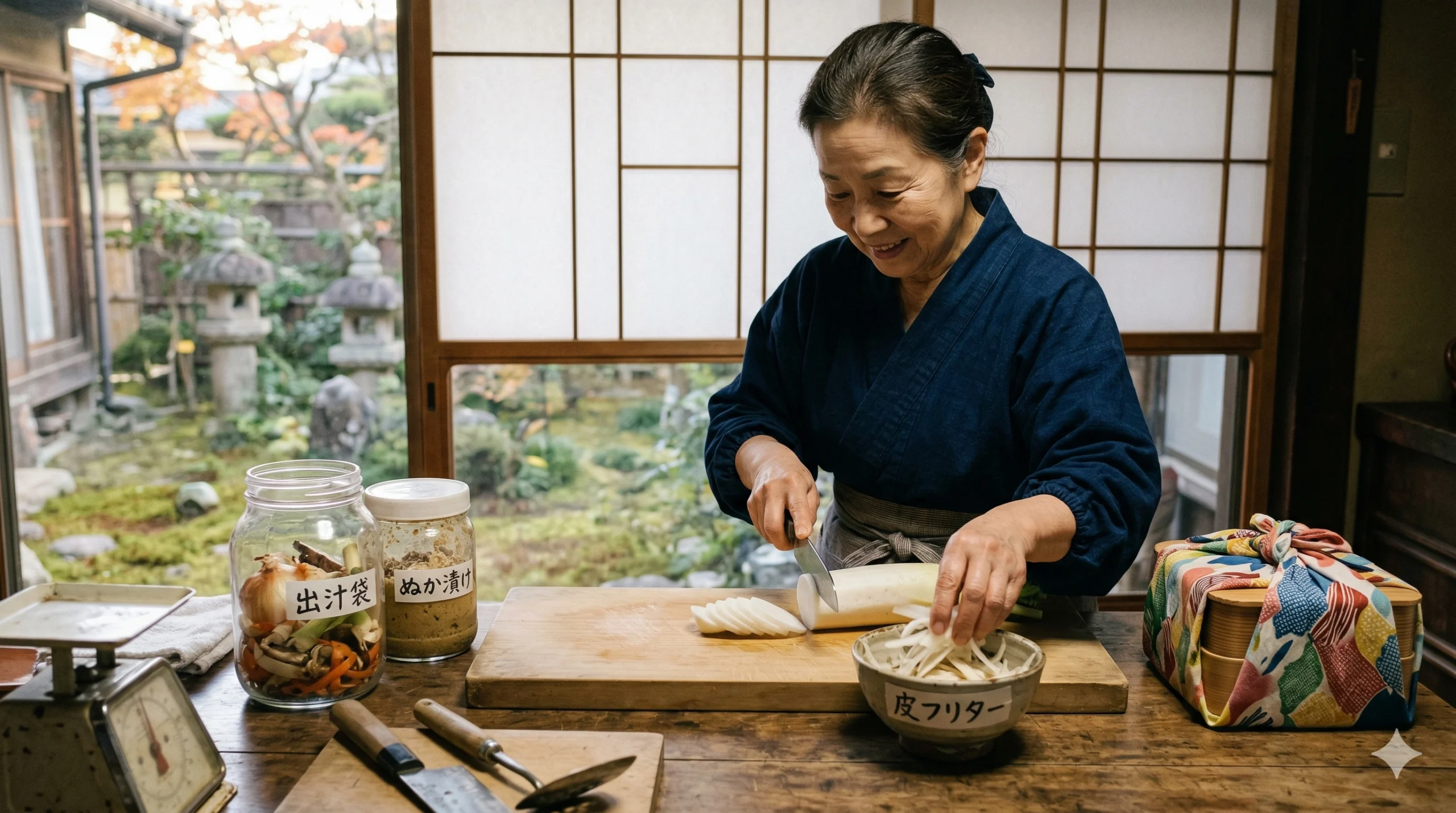
- Vegetable Skin Crisps: Instead of peeling carrots, potatoes, or daikon into the bin, Japanese home cooks scrub them clean and flash-fry the peels with a dash of Shio Koji. The result? A high-fiber, probiotic snack that outperforms any store-bought chip.
- The “Broth Bag” System: Every onion end, celery leaf, and shiitake stem is collected in a freezer bag. Once full, these are simmered to create a deep, umami-rich vegetable Dashi that serves as the base for soups and stews.
2. Fermentation as Waste Management
In 2026, Nukazuke (rice bran pickles) has become a global eco-trend.
- The Process: A “Nuka” bed is a fermented culture of rice bran. When you have leftover vegetable stubs—the end of a cucumber or the tough core of a cabbage—you simply bury them in the Nuka bed.
- The Result: Overnight, the waste is transformed into a crunchy, probiotic-rich pickle. It is a circular system where the “waste” becomes the most nutrient-dense part of the next meal.
3. Furoshiki and the End of Plastic Wrap
The zero-waste Japanese kitchen extends beyond the food itself. In 2026, the revival of Furoshiki (traditional cloth wrapping) has replaced single-use plastics in many eco-conscious households.
- These versatile cloths are used to cover fermentation jars, wrap bento boxes, and even preserve the moisture in fresh bread. They are washable, beautiful, and last for decades, embodying the “respect for objects” that Mottainai demands.
2026 Trend: The “Leftover Bento” Pride
The cultural stigma around “leftovers” has vanished. In 2026, the “Mottainai Bento” is a status symbol of resourcefulness.
- Small amounts of dinner’s grilled salmon are flaked into rice balls (Onigiri).
- Broccoli stalks are thinly sliced and sautéed with sesame oil.
- The final result is a lunch that costs zero extra dollars but offers a diverse nutritional profile that a fresh-cooked meal rarely matches.
How to Practice Mottainai Today
- Stop Peeling: If the skin is edible, keep it. If you must peel, save them for a “broth bag.”
- Use the “Scrap Sautée”: Radish tops and carrot greens are incredibly delicious when sautéed with a little soy sauce and sugar.
- Invest in Quality: Buy kitchen tools that can be repaired. In Japan, even a broken ceramic bowl is given new life through Kintsugi (repairing with gold). This mindset prevents the “urge to replace.”
Conclusion: Saving the Planet, One Peel at a Time
The Mottainai kitchen is not about deprivation; it is about discovery. When we stop seeing “waste” and start seeing “potential,” our cooking becomes more creative, our bodies become healthier, and our footprint on the Earth becomes lighter. In 2026, the most sophisticated kitchen is the one that leaves nothing behind.