
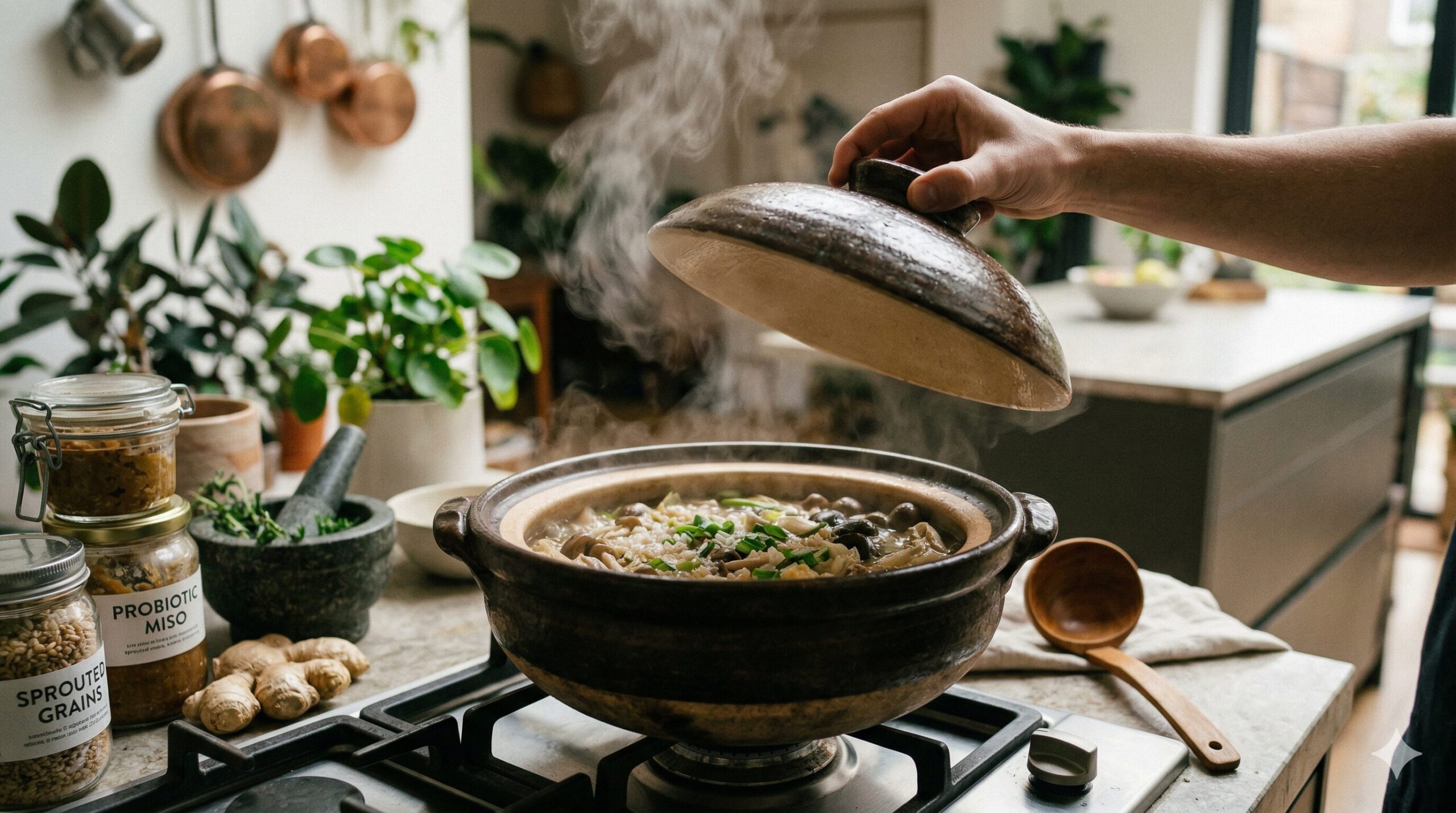
In the high-tech kitchens of 2026, where air fryers and smart ovens dominate, one of the most effective wellness tools is actually one of the oldest: the Donabe. These traditional Japanese clay pots, made from porous clay (often from the Iga region), are becoming a staple for health-conscious professionals who want to improve their gut health and nutrient absorption.
A Donabe is more than just a pot; it is a “living” vessel that changes how heat interacts with your food. If you’ve ever wondered why a simple vegetable stew tastes better in a clay pot than a stainless steel one, the answer lies in physics.
1. Far-Infrared Radiation (FIR): Cooking from the Inside Out
Unlike metal pots that heat only the surface of the food through conduction, the thick clay walls of a Donabe emit far-infrared radiation when heated.
- Even Cooking: FIR penetrates deep into the core of ingredients (like thick root vegetables or fish) simultaneously with the surface. This ensures that the food is cooked thoroughly without being over-boiled or destroyed on the outside.
- Flavor Preservation: Because the heat is gentle and steady, the cellular structure of the food remains intact, locking in natural juices and vitamins that are often lost in aggressive, high-heat cooking.
2. The “Slow-Cool” Effect and Enzyme Activation
One of the Donabe’s superpowers is its incredible heat retention. Even after you turn off the stove, the pot continues to cook the food for 10–15 minutes.
- Pre-Digestion: This extended “resting” period at a steady, descending temperature allows enzymes in the food to continue breaking down complex proteins and starches. This is effectively a “pre-digestion” phase, making the final meal much easier on your stomach.
- Starch Transformation: When cooking rice in a Donabe, the starch gelatinizes more completely, resulting in a lower glycemic response compared to rice cooked in a standard electric cooker.
3. One-Pot Social Wellness (Nabemono)
In 2026, we are reclaiming the dinner table as a place of healing. The Donabe is designed for Nabemono (one-pot communal dining).
- The “Zen” of Preparation: Slicing fresh greens, tofu, and mushrooms to simmer together in a light dashi broth at the center of the table creates a slow, mindful eating environment.
- The Nutritional Balance: A “Nabe” meal naturally encourages a high ratio of vegetables to protein, and because you consume the broth along with the solids, you ingest all the water-soluble vitamins (B and C) that usually go down the drain.
4. How to “Season” and Care for Your Donabe
A Donabe is a porous, living object. In 2026, “slow-ware” maintenance is part of the mindful living trend:
- Medome (The First Cook): Before using a new Donabe, you must boil rice or flour in it. The starch fills the microscopic pores of the clay, preventing leaks and making the pot stronger.
- Dry Thoroughly: Never put a wet Donabe on the fire, as the moisture inside the clay can expand and crack the pot.
- The Patina: Over time, the bottom of your Donabe will darken and develop a “scorch” mark. In Japan, this is called Aji (flavor/character)—it’s a sign of a well-loved pot that distributes heat even better than a new one.
Conclusion: Returning to the Source
As we look for ways to optimize our health in 2026, the Donabe reminds us that sometimes the best technology is nature itself. By cooking in clay, we slow down the pace of our life, improve the bioavailability of our food, and bring the warmth of the earth directly to our table.