
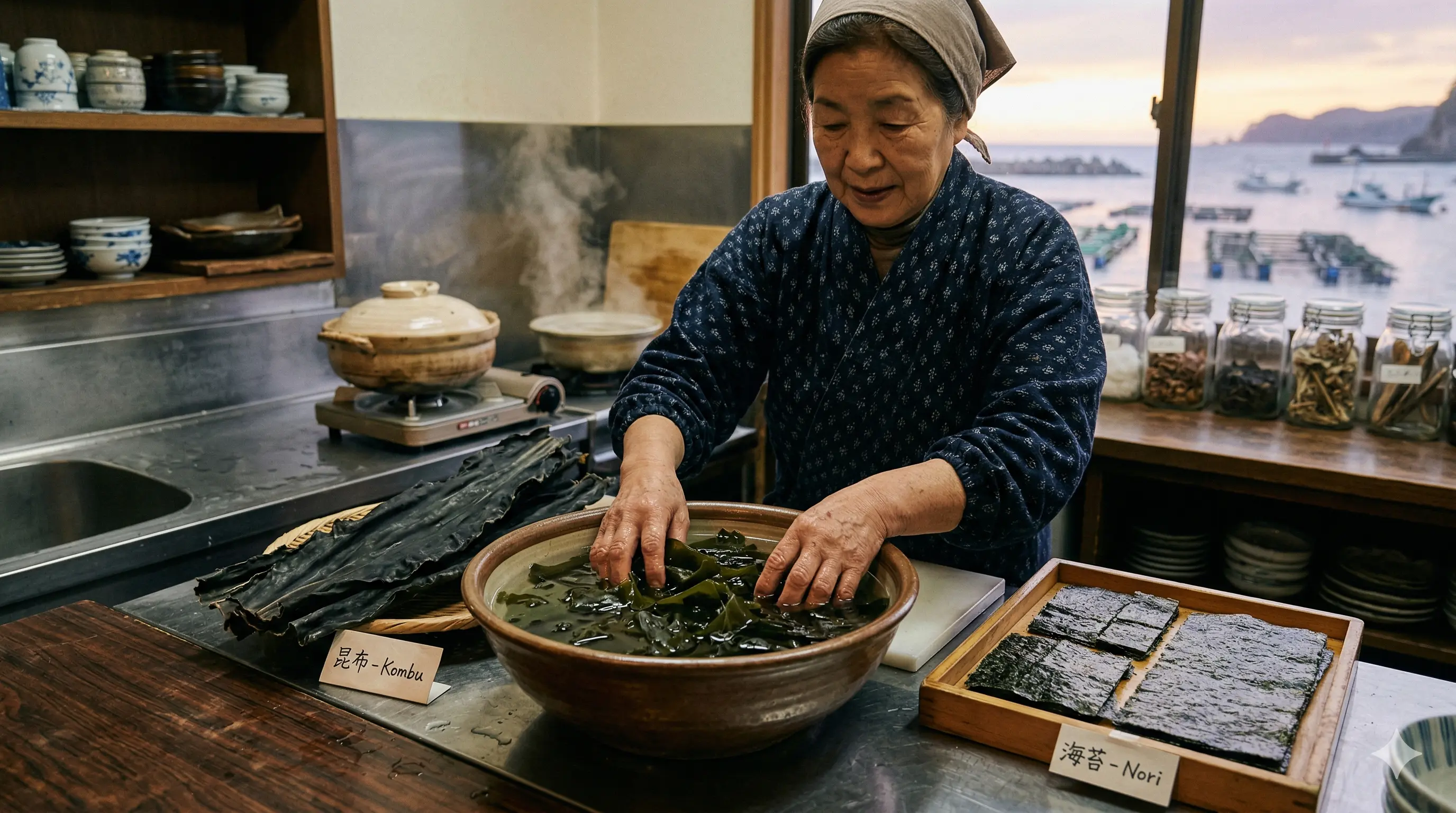
In 2026, as soil depletion continues to lower the mineral content of land-grown vegetables, nutritionists are turning their attention to the ocean. Japan has known this secret for millennia: Seaweed is not just a garnish; it is a vital source of trace minerals that are increasingly rare in the modern diet.
From the crispy sheets of Nori to the deep umami of Kombu, marine algae are the “multi-vitamins” of the Japanese archipelago. For a world facing widespread iodine and magnesium deficiencies, seaweed offers a sustainable, plant-based solution.
The most critical nutrient found in seaweed is Iodine, an element essential for healthy thyroid function.
- Metabolic Regulation: Your thyroid controls your metabolism, energy levels, and body temperature. In 2026, where “unexplained fatigue” is a common complaint, seaweed provides the fuel the thyroid needs to function optimally.
- The “Goldilocks” Balance: While the West often relies on iodized salt, Japanese cuisine uses whole-food sources like Kombu (the highest in iodine) and Wakame, which provide the mineral in a bioavailable form alongside fiber that helps regulate absorption.
2. Kombu: The Master of Gut Health and Umami
Kombu is the primary ingredient in Dashi (Japanese stock). Beyond flavor, it is a nutritional powerhouse:
- Glutamic Acid: This natural amino acid provides the “Umami” taste and helps improve digestion by stimulating the stomach lining.
- Fucoidan: A complex carbohydrate found in brown seaweed like Kombu and Mozuku. In 2026, it is being researched for its anti-inflammatory and immune-modulating properties, potentially helping to protect against chronic lifestyle diseases.
3. Nori and Wakame: Everyday Superfoods
You likely encounter these two daily, but their benefits go far beyond the sushi roll:
- Nori (The Crispy Sheet): Surprisingly high in protein (up to 50% of its dry weight) and rich in Vitamins A, C, and B12. For vegans in 2026, Nori is a rare plant-based source of bio-available B12.
- Wakame (The Salad Seaweed): Contains Fucoxanthin, a compound that has been shown in clinical trials to assist in fat burning, particularly around the abdominal area, by increasing the expression of thermogenin.
4. Sustainability: The 2026 Environmental Choice
Seaweed is perhaps the most sustainable crop on Earth.
- Zero Input: It requires no fresh water, no fertilizer, and no land.
- Carbon Sequestration: Seaweed forests grow up to 30 times faster than land forests and are incredibly efficient at absorbing CO2, making your bowl of Miso soup a vote for a healthier planet.
How to Integrate Seaweed Into Your 2026 Diet
- The “Kombu Strip”: Add a small piece of dried Kombu to your pot when cooking beans or brown rice. It breaks down complex sugars, making the food easier to digest and less gas-inducing.
- The Nori Snack: Replace processed potato chips with toasted Nori sheets seasoned with olive oil and sea salt.
- The Wakame Soak: Keep a bag of dried Wakame in your pantry. A 5-minute soak in water transforms it into a perfect addition to any salad or soup.
Conclusion: A Mineral Gift from the Deep
Seaweed reminds us that the earth’s health and our own are deeply intertwined. By incorporating these marine superfoods into our routines, we aren’t just fixing a mineral deficiency—we are reconnecting with the ancient, life-giving power of the sea.