
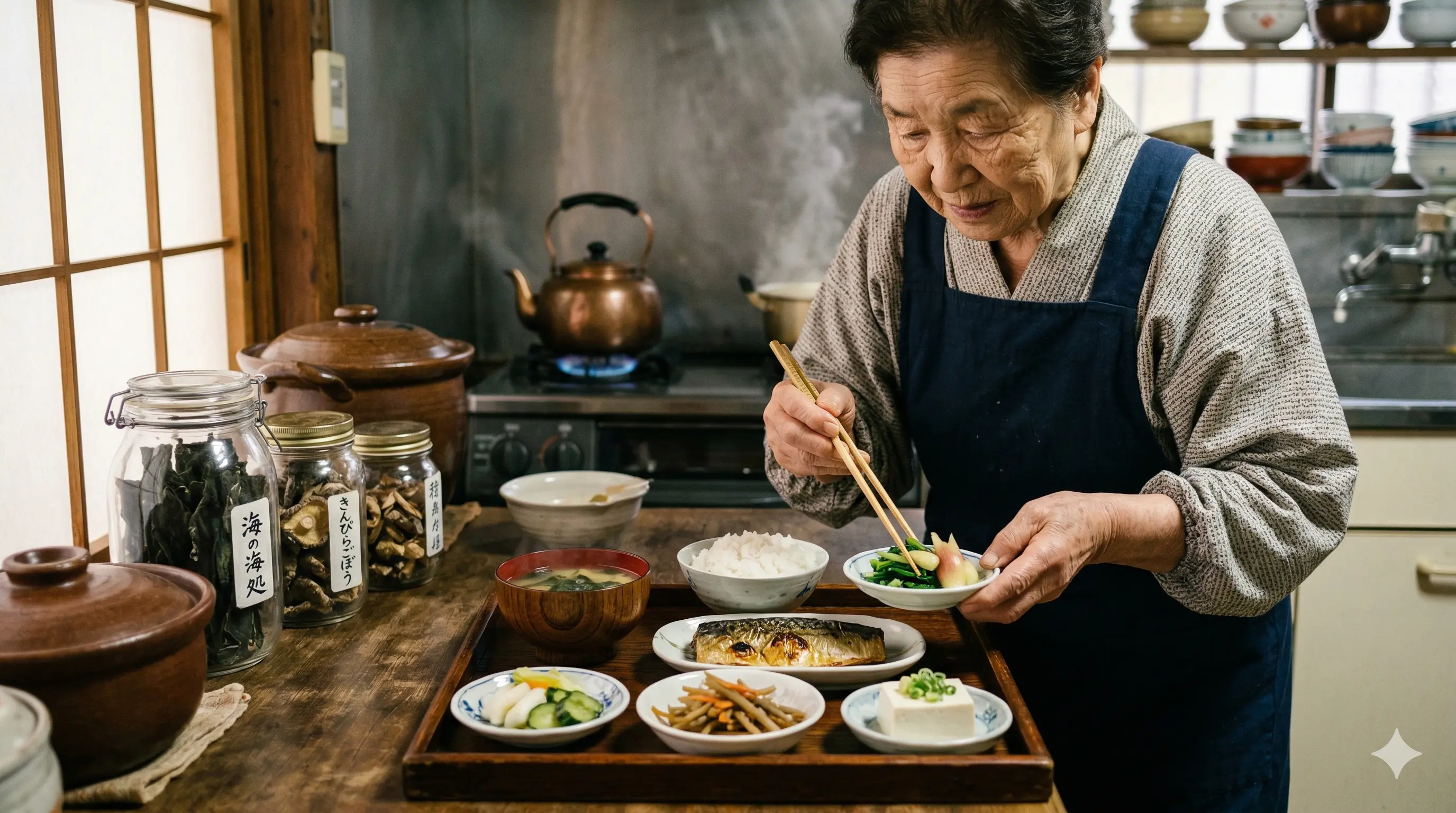
In 2026, as the world moves away from restrictive “fad diets,” the focus has shifted toward sustainable dietary patterns. In 2013, Japan’s traditional dietary culture, Washoku, was designated a UNESCO Intangible Cultural Heritage. It wasn’t honored just because it tastes good, but because it represents a social and biological blueprint for human longevity.
Washoku is a holistic system based on the harmony of nature, the balance of nutrients, and the aesthetic of the seasons. To eat the Washoku way is to eat in alignment with your body’s ancestral needs.
1. The “Ichiju Sansai” Framework
The structural foundation of Washoku is Ichiju Sansai, which translates to “one soup, three sides” (plus a bowl of rice). This isn’t just a tradition; it’s a nutritional safety net.
- The Soup (Ichiju): Usually a miso-based Dashi, providing hydration and probiotics.
- The Main Side: Typically a high-quality protein like grilled fish or tofu.
- Two Sub-Sides: Usually vegetables, seaweeds, or mushrooms, prepared in different ways (steamed, simmered, or pickled).
The Result: By following this structure, you automatically ensure a diverse intake of vitamins, minerals, and fibers, preventing the “monotonous eating” that leads to nutrient deficiencies.
2. The “Five Colors” and “Five Flavors”
Washoku practitioners follow the principle of Goshiki (five colors) and Gomi (five flavors). In 2026, we now have the science to back up these ancient aesthetic rules:
- Five Colors (Red, Yellow, Green, White, Black): Ensuring these five colors are on your plate is a visual shortcut to getting a full spectrum of phytochemicals and antioxidants.
- Five Flavors (Sweet, Sour, Salty, Bitter, Umami): By hitting all five taste receptors, your brain receives a signal of “complete satisfaction,” which prevents the cravings that lead to late-night snacking.
3. “Shun”: The Power of Seasonal Eating
The concept of Shun—eating ingredients exactly when they are at their peak—is the heartbeat of Washoku.
- Nutrient Peak: Science shows that vegetables harvested at their peak (e.g., spinach in winter) can have up to 3 times the vitamin content of those grown out of season.
- Environmental Harmony: Eating “Shun” ingredients helps your body adapt to the local climate, such as cooling cucumbers in the summer or warming root vegetables in the winter.
4. Low Fat, High Umami
Unlike many Western cuisines that rely on animal fats (butter, cream) for flavor, Washoku relies on Umami (savoury depth) derived from Dashi (kelp and bonito).
- Caloric Efficiency: This allows for deep, satisfying flavors with significantly fewer calories and less saturated fat, protecting the heart and maintaining a healthy weight in a sedentary 2026 lifestyle.
How to Apply Washoku Principles Today
- Start with the Soup: Make a bowl of miso soup the “anchor” of your meal. It slows down your eating pace and prepares your stomach for digestion.
- The “Handful” Rule: Aim for a variety of small dishes rather than one giant plate. Use small bowls to naturally control portions.
- Color Check: Look at your plate. If it’s all one color, add a piece of nori (black), a tomato (red), or a slice of ginger (yellow).
Conclusion: The Wisdom of Balance
Washoku teaches us that health is not found in a single “superfood” but in the arrangement of the whole. In 2026, as we seek a more grounded and peaceful existence, the traditional Japanese table offers a daily opportunity to practice balance, gratitude, and longevity.