
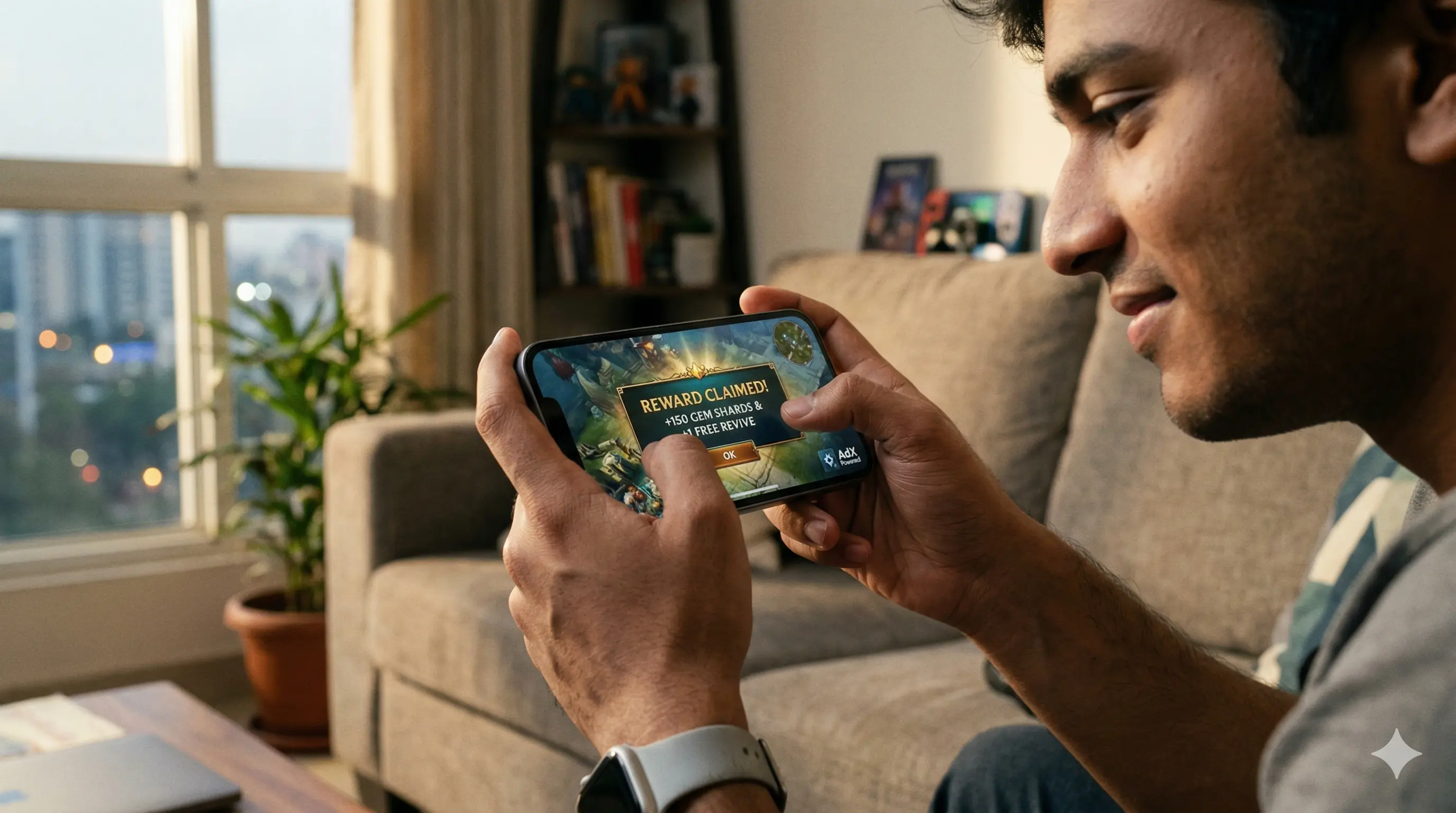
In 2026, the old method of “bombarding” players with ads is a guaranteed way to kill your game. Players have matured; they now give a new title exactly 3 to 5 sessions to prove it respects their time before they hit “uninstall.” For a studio like Druvion Studio, the goal is to shift from viewing ads as an interruption to viewing them as a voluntary exchange of value.
Modern monetization is no longer just about generating revenue; it’s about protecting your D7 (Day 7) and D30 retention. If your monetization strategy hurts your retention, you are effectively paying to lose your audience.
1. The 2026 Powerhouse: Rewarded Video Ads
Rewarded video remains the king of mobile game monetization in 2026, accounting for over 60% of in-app ad revenue.
- The Psychology of Choice: Unlike intrusive pop-ups, rewarded ads are opt-in. Players choose to watch a 15-second clip in exchange for a “Second Life” in Zombie Signal: Last Outbreak or extra resources in Battle Lines: Army Rush.
- Retention Booster: Data shows that players who engage with rewarded ads in their first week have a 53% higher retention rate. Why? Because the rewards help them overcome “friction points” in the game, keeping them in the “flow state” longer.
2. Using AdX to Set “Value Floors”
Google AdX (Authorized Buyers) has become the essential tool for game developers to move beyond the “penny-ante” revenue of standard networks.
- Premium Demand: AdX allows you to tap into high-end advertisers who are willing to pay $10–$50 eCPMs for rewarded video placements.
- Dynamic Bidding: Instead of a fixed rate, every ad slot is auctioned in real-time. This ensures that if a premium brand (like a new car launch or a major film) wants to reach your “Army Rush” players, they have to pay the highest market rate.
3. The “Interstital” Trap: Handling Natural Breaks
Interstitial ads (full-screen pop-ups) are the most dangerous format for retention. In 2026, if you use them, you must follow the “Natural Pause” rule:
- Never Interrupt Mastery: Never trigger an ad while a player is performing an action or in the middle of a level.
- The Transition Point: The only safe place for an interstitial is between major loops—for example, after a level is completed but before the results screen appears.
- Frequency Capping: Limit these to once every 15 to 20 minutes of active play. Any more, and your “uninstalls” will spike.
4. Hybrid Monetization: The 72% Standard
By 2026, 72% of top-grossing games use a hybrid model. This is the strategic “Gold Standard” for your studio:
- Ads for Casuals: Use rewarded videos to monetize the 95% of players who will never spend money.
- Micro-IAPs for “Minnows”: Offer small $0.99 packs that provide permanent value (like a unique weapon skin) to convert free players into payers.
- Subscriptions for “Dolphins”: A $4.99 “Battle Pass” or “Monthly VIP” that removes forced ads and provides daily currency is the best way to create predictable, recurring revenue.
Conclusion: Monetization as a Service
In 2026, you don’t monetize what you don’t retain. Your job as a developer is to make sure your ads feel like a choice, not a punishment. When you align your AdX strategy with your player’s progress, your revenue will grow naturally alongside your community. Remember: in the modern Play Store, Retention is the base, and Monetization is the multiplier.