
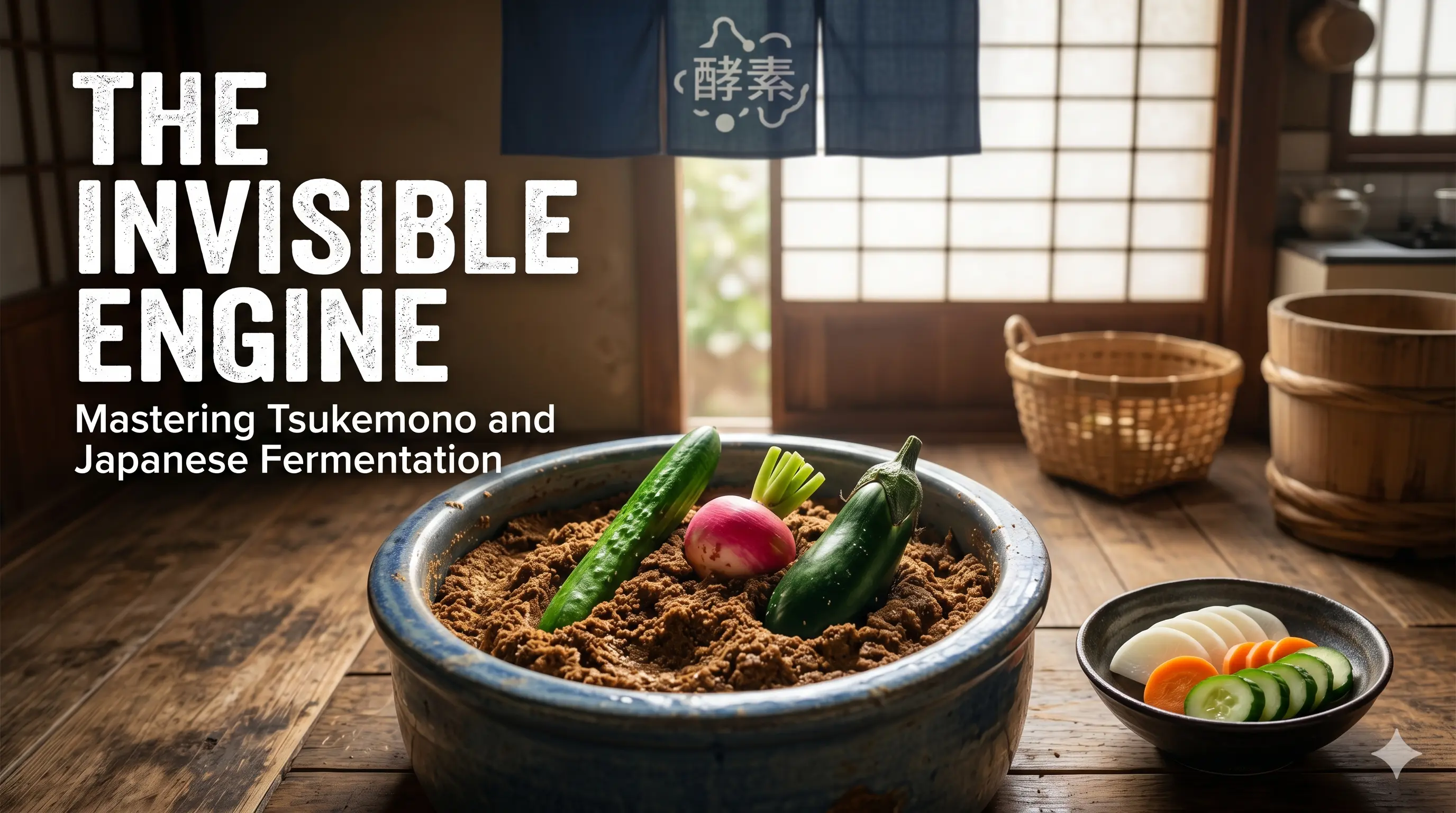
While a Japanese meal is often judged by the quality of its fish or the architecture of its sushi rice, the quiet, almost invisible engine driving its complex flavor profile is Tsukemono (Japanese pickles). Tsukemono is not merely an accompaniment; it is a vital digestive aid, a flavor balancer (hashiyasume, or “chopstick rest”), and a masterclass in controlled fermentation.
Unlike Western pickles, which rely primarily on immersion in acidic vinegar, Japanese Tsukemono focuses on lactic acid fermentation. This process manipulates moisture to select for beneficial bacteria (like Lactobacillus) that transform raw sugars into deep, umami-rich acids. This article dives into the technical complexity of Japan’s two most difficult pickle techniques: Nukazuke (rice bran pickles) and Misozuke (miso-cured pickles).
Part 1: Nukazuke – Curing in the “Nukadoko” Mother Bed
The pinnacle of Japanese pickling mastery is Nukazuke. This method involves burying vegetables in a fermented, moist bed of rice bran (nuka).
The Architecture of the Nukadoko
The Nukadoko is a living ecosystem. Creating a high-quality “mother bed” is an act of chemical architecture that can take weeks to mature.
- The Foundation: The bed is constructed from raw rice bran, salt (10-15% by weight), and water, which is often enhanced with a small piece of Kombu and chili peppers for complexity.
- The Maturity Cycle: For the first two weeks, the bed must be “fed” daily with “starter vegetables” (like cabbage leaves) that are buried and discarded. This selects for strong lactic acid bacteria and yeast while suppressing putrefying pathogens.
- The Aroma Signature: A mature, professional Nukadoko should not smell of rot; it should have a pleasant, slightly alcoholic, sweet-sour aroma, similar to fine sake or sourdough starter.
The Dynamics of Daily Maintenance
The complexity of Nukazuke lies in its required interaction.
- Daily Stirring: The bed must be stirred by hand every single day. This introduces oxygen into the top layers to support yeast growth, while pushing lactic acid bacteria (which are anaerobic) to the oxygen-starved center. If the bed is not stirred, the yeast takes over, creating a heavy “paint-thinner” odor.
- Umami Transmission: Moisture from the vegetables is exchanged for the salt, minerals, and complex amino acids in the bran. This creates a pickle that retains its internal crispness but acquires a savory, nutty, and sophisticated funk.
Part 2: Misozuke – The Miso-Cured Preservation Strategy
Misozuke is a curing technique rather than a pure fermentation. It utilizes the powerful preservative qualities of aged Miso (fermented soybean paste) to cure root vegetables or, more famously, proteins like salmon or sablefish.
The Enzyme Infiltration
Miso is rich in enzymes, including protease and amylase.
- Flavor Implosion: When fish is placed in a miso cure, these enzymes begin to infiltrate the flesh, breaking down complex proteins into simple amino acids (glutamates—Umami). This physically changes the structure of the fish, transforming it from bouncy and watery to firm, smooth, and deeply savory.
- Technical Application: The traditional cure (misodoko) must have the consistency of wet sand. For vegetables, they are often salted first to draw out moisture, preventing the miso bed from becoming too watery and spoiling.
The Time Constraint
Unlike Nukazuke (which takes 6-24 hours), Misozuke for proteins takes days.
- The Standard: 24-48 hours. Any longer, and the miso’s salt and heavy aroma will overpower the delicate natural sugars of the fish.
Conclusion: The Quiet Catalyst of the Palate
Tsukemono is the quiet, invisible engine of the Japanese table. Whether it is the earthy funk of a Nukazuke daikon, the smoky sweetness of Misozuke salmon, or the floral tang of Shiozuke (salt-pickled) turnip, these preparations are not accidental. They are technical achievements in humidity control, microbial selection, and time management. Understanding the fermentation dynamics of Tsukemono is the key to mastering the invisible spectrum of Japanese flavor.