
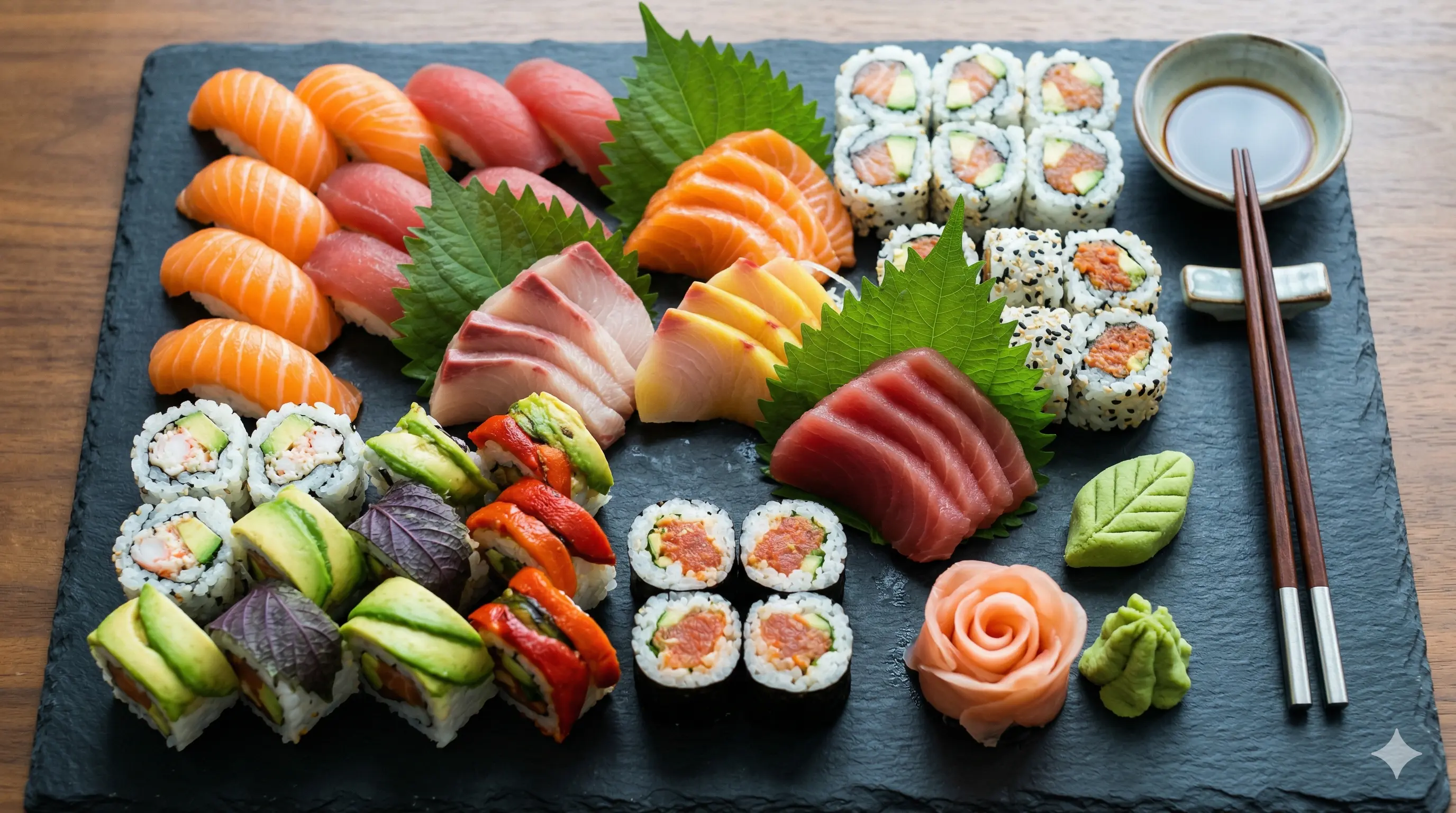
If you are planning an office lunch, a dinner party, or even just a complex date night, few things impress like a professionally arranged sushi platter.
At FOB Sushi Bar, we are proud of our “Pay-by-Weight” system, but the art of the presentation is just as important as the flavor of the fish. A perfect sushi tray should be balanced in color, texture, and dietary options. Here is a culinary guide to assembling a catering tray that looks as good as it tastes.
1. The Power of Platter Choice
The foundation of your presentation is the tray itself. A standard ceramic dinner plate looks cluttered. Instead, opt for:
- Dark Slate: The black, textured surface makes vibrant orange salmon and deep red tuna “pop.”
- Bamboo Plank: Offers a warm, traditional Japanese feel.
- Minimalist White Plate: For a modern, clean, and professional look.
2. The Golden Rule: Create Symmetry, Not Clutter
A professional tray is structured, not random. The most common pitfall is just piling different rolls on top of each other. Instead, arrange your sushi in distinct zones:
- Rows and Fanning: Arrange Nigiri pieces in perfect, slightly overlapping rows. Fan Sashimi slices into elegant semicircles rather than stacking them.
3. Using Colors for Contrast
Think of your tray as a canvas. A monotonous platter of all-salmon or all-cucumber rolls is boring.
- Combine Colors: Alternate vibrant reds (tuna), oranges (salmon/masago), whites (hamachi), and greens (avocado/cucumber).
- The “Dietary” Zone: Create a dedicated, colorful section for vegetarian/vegan rolls. Using roasted peppers (see our previous guide) adds a bright red-yellow contrast that is highly visual.
4. Essential Garnish for “Texture”
Garnish isn’t just about looks; it adds crucial aromatic and texture contrasts.
- Shiso Leaf: The absolute essential. Use these large, distinct leaves to physically separate different sections of fish and rolls.
- Sesame Seeds: Lightly sprinkle toasted black and white sesame seeds over simple maki rolls for texture.
5. Managing Condiments (Wasabi and Ginger)
Condiments should be integrated, not an afterthought.
- Wasabi: For a professional look, scoop a small amount of wasabi into a tiny ball, or use a shibori (wringing) technique to create an artistic peak.
- Gari (Pickled Ginger): Roll the ginger slices into an elegant, overlapping rose shape. Position the rose at the corner of the plate to act as a center point.