
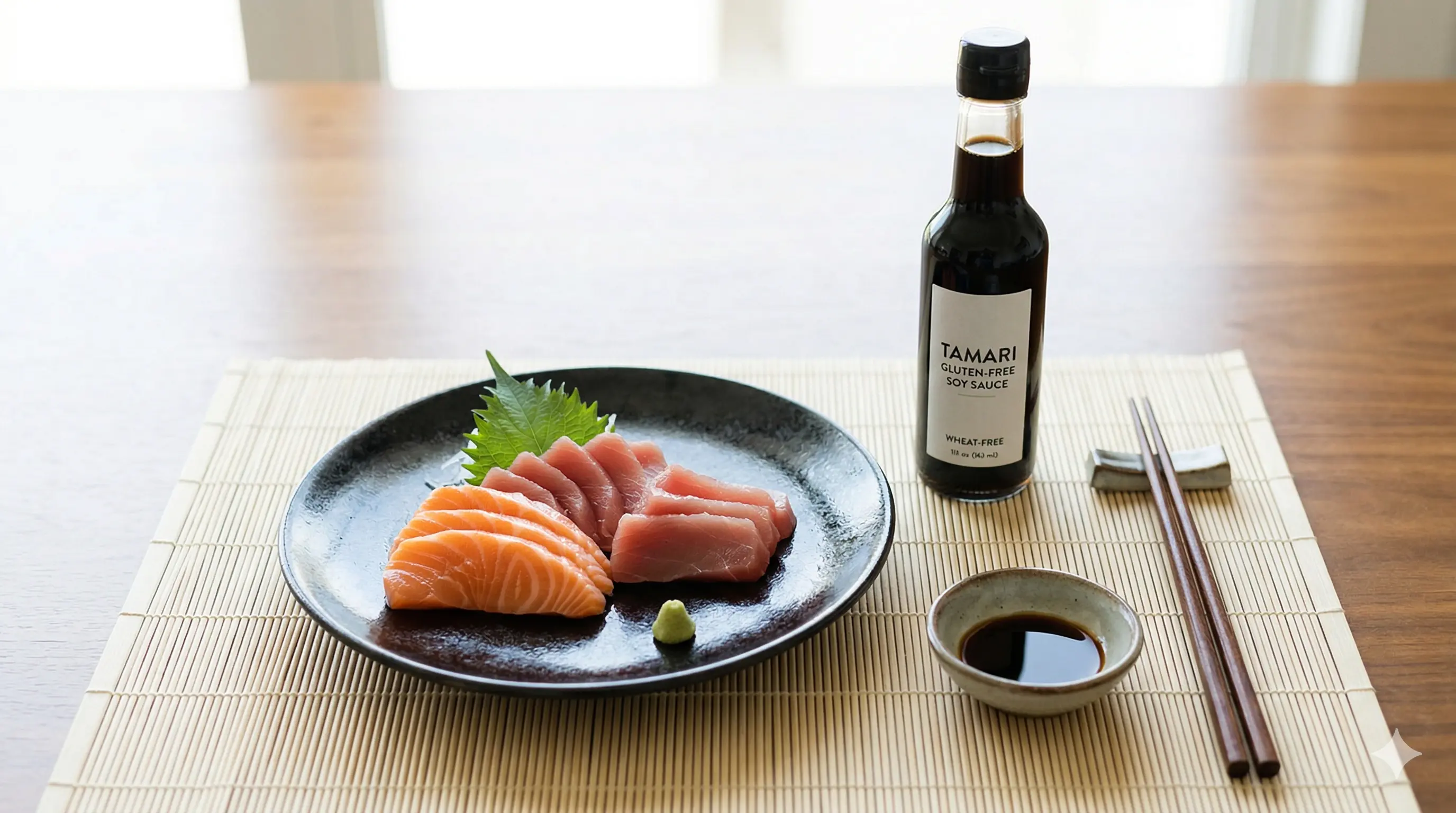
For diners with Celiac disease or gluten sensitivity, the phrase “let’s get sushi” can be stressful rather than exciting. While sushi rice, fish, and vegetables are naturally gluten-free, the Japanese kitchen is full of hidden traps.
The most famous culprit is Soy Sauce (Shoyu), which is typically brewed with wheat. But there are other dangers you must avoid to ensure a safe, delicious meal. Here is how to navigate the sushi bar, whether you are eating out or cooking at home.
1. Avoid Hidden Wheat in the Rice (The Vinegar Problem)
While standard Sushi Su (vinegar seasoning) is made from rice vinegar, some commercial kitchens or cheap products use Malt Vinegar or a vinegar blend derived from grain. Malt vinegar contains gluten.
- The Rule: At home, only use 100% pure Rice Vinegar for your sushi rice.
2. Shun the ‘Fake’ Fish (Kani)
One of the biggest pitfalls is “Kani,” or Imitation Crab Meat. You’ll see it everywhere, especially in California rolls. Imitation crab is a highly processed seafood product (known as Surimi) made from pulverized white fish that is bound together with starches. These starches almost always contain wheat.
- The Rule: Look for “Real Crab” (Zuwaigani) or stick to whole fish (Salmon, Tuna, Yellowtail).
3. Pass on the Tempura and Sauces (The Frying Trap)
This seems obvious, but the danger goes deeper than just the battered shrimp itself.
- Tempura: Any “Crunchy” or tempura-style roll is off-limits, as the light batter is made with wheat flour.
- Sauces: The sweet, dark glaze often called “Eel Sauce” or Nitsume is not actually made from eels, but rather a reduction of soy sauce (wheat-based) and sugar. Similarly, many restaurants make their Spicy Mayo by blending in a standard commercial mayo that may contain gluten as a thickener.
- The Rule: When in doubt, stick to clean, simple preparations. The best sushi showcases the natural flavor of the fish, not the sauce.