
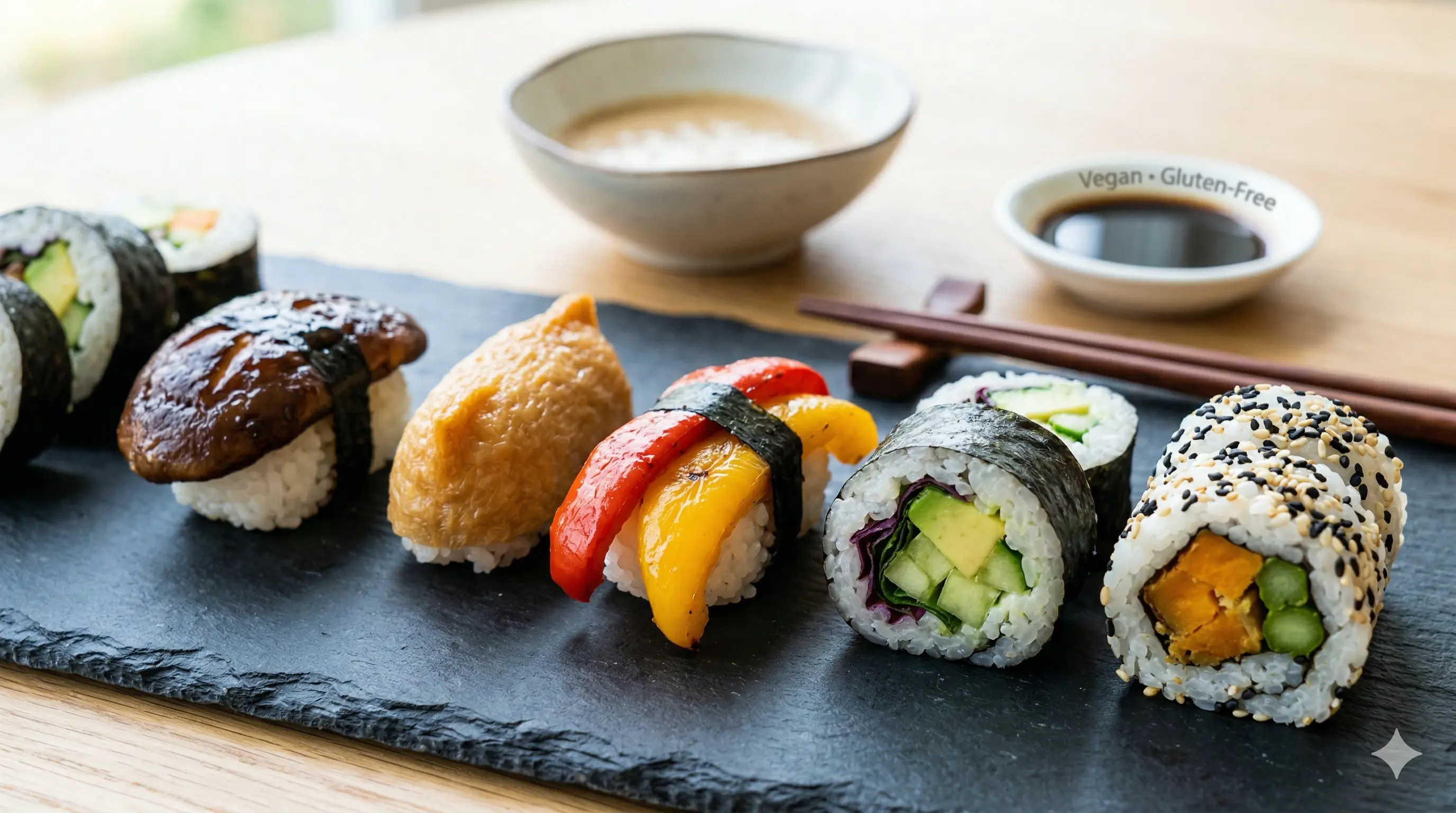
When most people hear the word “sushi,” their mind immediately goes to raw fish. However, sushi actually refers to the vinegar-seasoned rice, not the toppings. Historically, vegetarian sushi has always had a strong presence in Japanese culture, often prepared for Buddhist dietary requirements.
Today, making high-quality vegan and vegetarian sushi isn’t about substitution; it’s about celebration. Here is how to create stunning, flavorful plant-based sushi that goes beyond simple avocado rolls.
1. The Power of Umami (Savory Depth)
Raw fish provides a lot of natural oils and umami. When cooking for vegans, you need to replace that depth.
- Shiitake Mushrooms: A true vegan secret weapon. Rehydrate dried shiitake mushrooms in hot water, then simmer them in a mixture of soy sauce, mirin (sweet rice wine), and a pinch of sugar. The result is a savory, meaty texture that is perfect for inside a roll or on top of nigiri.
2. Texture is Key
Sushi is a balance of textures. Since you are losing the delicate chew of raw fish, you must add it elsewhere.
- Marinated Tofu (Inari): Tofu skin pockets (known as Inari) are a sweet, savory, and chewy staple. They can be stuffed with seasoned rice and finely diced vegetables.
- Tempura Vegetables: Sweet potato, asparagus, or zucchini tempura adds a dramatic, crunchy texture that pairs well with smooth avocado.
3. The Art of the Vegetable Cut
Just like with slicing fish, the way you cut vegetables changes their flavor and texture.
- Daikon and Carrot: Use a Katsuramuki (sheet cutting) technique or a mandoline to create translucent, crunchy ribbons. These look beautiful wrapped around the outside of a roll.
- Bell Pepper: Roast the peppers until the skin is charred, then peel and slice them. The resulting texture is surprisingly similar to cooked tuna or salmon, with a sweet, smoky flavor.
4. Flavor Boosting Sauces
Many traditional sushi sauces are not vegan (e.g., standard spicy mayo, Eel Sauce). You must make your own:
- Eel-Less Sauce (Nitsume): Simmer 1 part soy sauce with 1 part mirin and 1/2 part sugar until it thickens into a glaze.
- Vegan Spicy Mayo: Mix vegan mayonnaise with Sriracha and a pinch of garlic powder.
- Sesame Dressing: A rich, blended sauce of toasted sesame seeds, rice vinegar, and a neutral oil.