
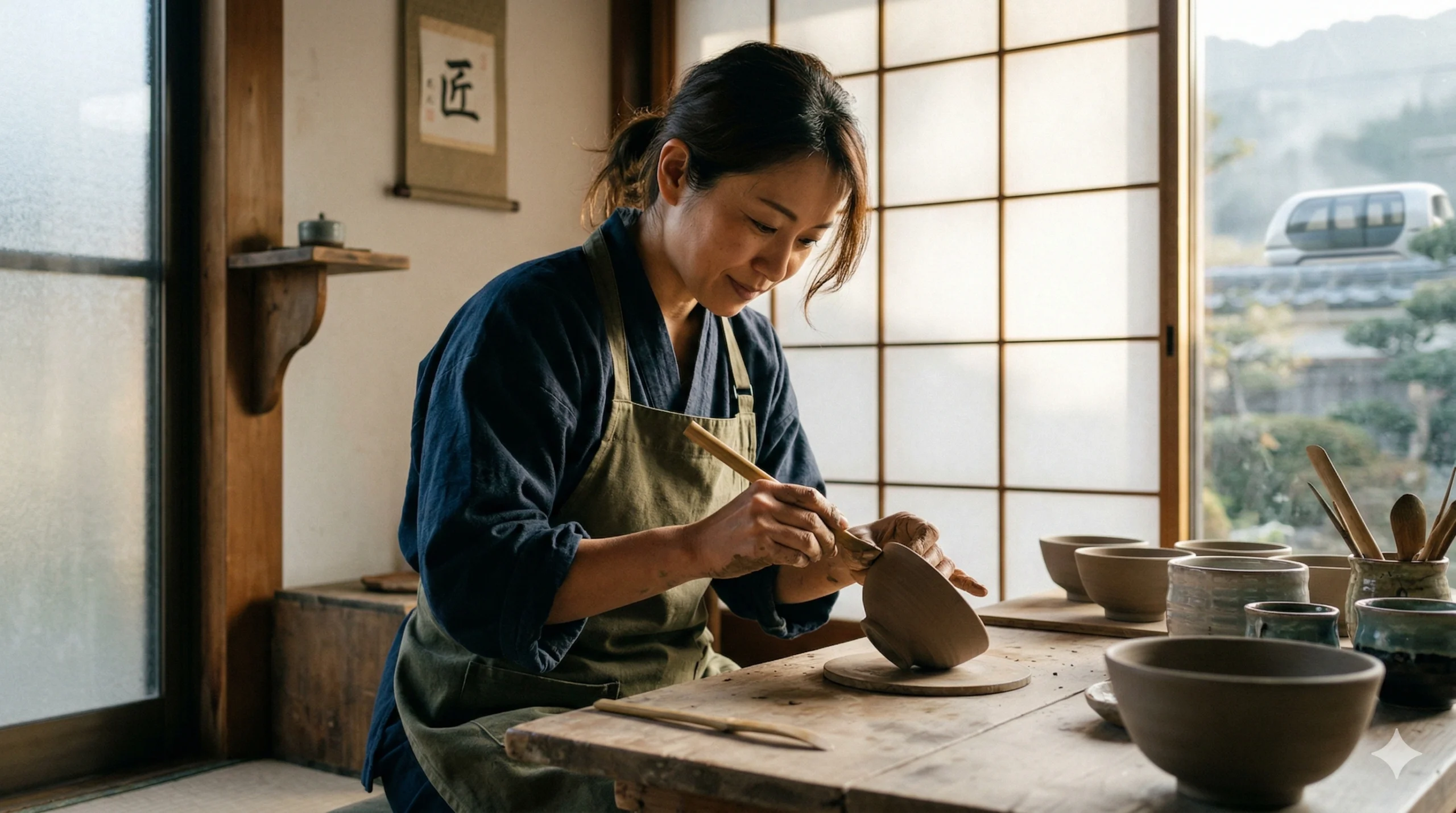
In a 2026 economy where AI can generate “good enough” results in seconds, the human element of excellence has become a premium luxury. Japan’s concept of Takumi (匠)—the pursuit of peak craftsmanship—is no longer just for elite sword-smiths or master chefs. It is becoming the essential mindset for anyone looking to find deep satisfaction and career stability in a rapidly changing world.
A Takumi is an artisan who has dedicated at least 60,000 hours to their craft. But the secret isn’t just the time spent; it’s the quality of attention given to the most repetitive, mundane details. In 2026, the Takumi spirit is our best defense against the “disposable culture” of the digital age.
1. The Power of “Micro-Mastery”
The Takumi approach is built on the belief that how you do the smallest thing is how you do everything.
- Refining the Basics: A master sushi chef may spend years just learning how to wash and cook rice correctly. In your professional life in 2026, this translates to mastering the “invisible” basics—the way you structure a thought, the precision of your communication, or the organization of your workspace.
- The “Just 1% Better” Rule: A Takumi doesn’t look for radical shortcuts. They look for a 1% improvement in a process they have already done ten thousand times. This incremental growth creates a “compound interest” of skill that technology cannot easily replicate.
2. Finding Flow in Repetition
In 2026, we often view repetitive tasks as “drudgery” to be automated. The Takumi, however, views repetition as a path to Muga (selflessness)—a state where the barrier between the person and the work disappears.
- Active Meditation: By focusing intensely on the tactile sensations of a task—the click of a keyboard, the texture of paper, the logic of code—you transform a “boring” chore into a source of psychological flow.
- Neuroscience of Mastery: Deep, repetitive practice thickens the myelin sheath around neural pathways, making complex actions feel effortless. This “effortless effort” is the hallmark of the master.
3. Sustainable Career Longevity
The Takumi spirit is the ultimate antidote to the “hustle culture” that leads to burnout.
- Pace over Pressure: While the world demands “faster,” the Takumi demands “better.” This shift in focus reduces the stress of competition and replaces it with the joy of personal evolution.
- The “Legacy” Mindset: When you approach your work as a craft, you aren’t just working for a paycheck; you are building a body of work. In 2026, this sense of building something lasting provides the mental resilience needed to navigate economic shifts.
4. How to Cultivate the Takumi Spirit Today
You don’t need a workshop to be a Takumi. Start with these three principles:
- Eliminate the “Good Enough”: Pick one task you do daily and decide to do it with absolute, uncompromising excellence. Notice the difference in how you feel afterward.
- Respect Your Tools: Whether it’s a high-end Japanese knife or a simple laptop, treat your tools with care. Clean them, organize them, and respect their role in your craft.
- Appreciate the Process: Fall in love with the doing, not just the done. The Takumi finds as much beauty in the shavings on the floor as they do in the finished cabinet.
Conclusion: The Return of the Human Touch
As we move further into 2026, the things that are “perfectly” made by machines will become common. The things that are “exquisitely” made by humans—with all the subtle care, history, and spirit of a Takumi—will become priceless. By treating your life and your work as a craft, you ensure that you remain not just relevant, but essential.