
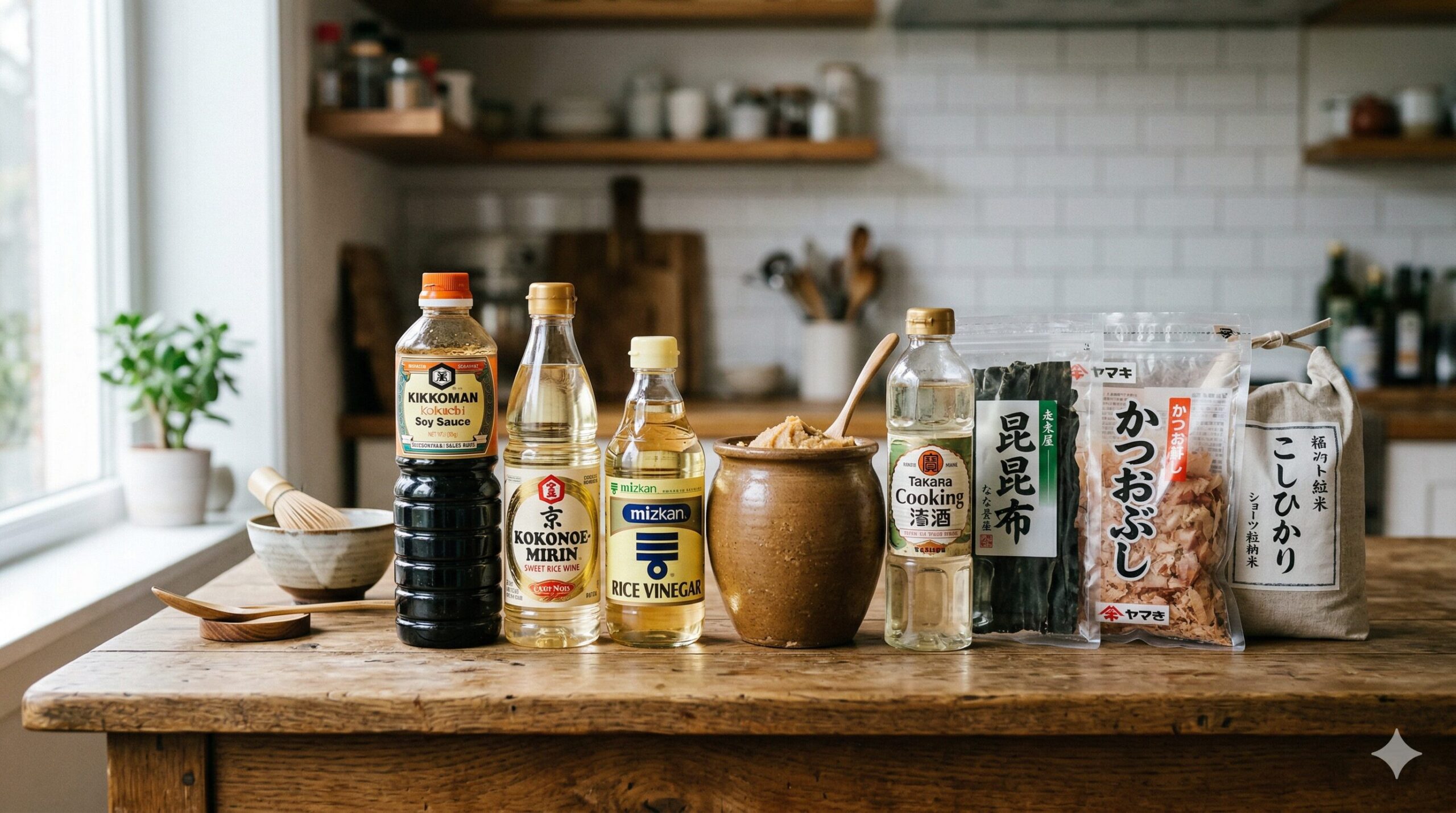
Japanese cuisine is often celebrated for its complexity and “Umami” depth, which can make it feel intimidating for home cooks. However, the secret to authentic Japanese flavor isn’t a hundred different spices—it is a small, specific set of high-quality fermented liquids and seasonings.
By stocking just seven essential ingredients, you can recreate over 80% of classic Japanese dishes, from Teriyaki to Miso soup, right in your own kitchen. This guide will help you build your foundation with E-E-A-T (Experience, Expertise, Authoritativeness, and Trustworthiness) principles in mind.
1. Shoyu (Japanese Soy Sauce)
While many cuisines use soy sauce, Japanese Shoyu is unique because it is brewed with an equal mix of soybeans and wheat, giving it a sweeter, more nuanced aroma.
- Expert Tip: For general cooking, look for “Koikuchi” (dark soy sauce). It is the all-purpose standard. If you are gluten-intolerant, “Tamari” is a great substitute that remains authentic to Japanese traditions.
2. Mirin (Sweet Rice Wine)
Mirin is a rice wine with low alcohol content and high sugar content. It provides a beautiful luster to sauces (like the shine on Teriyaki chicken) and adds a mild sweetness that balances the saltiness of soy sauce.
- Look for: “Hon-Mirin” (true mirin) for the best flavor. If you can only find “Mirin-fu” (mirin-style seasoning), it will work, but it often contains more corn syrup.
3. Rice Vinegar (Kome-zu)
Japanese rice vinegar is much milder and less acidic than Western white vinegar or apple cider vinegar. It is essential for making sushi rice and refreshing “Sunomono” (vinegar-based salads).
- Substitution Note: In my experience, if you must substitute, use white wine vinegar with a pinch of sugar, but never use distilled white vinegar—it is far too harsh for delicate Japanese flavors.
4. Miso (Fermented Soybean Paste)
Miso is the soul of Japanese comfort food. It’s a fermented paste made from soybeans, salt, and koji (a mold starter).
- The Big Two: Start with Shiro Miso (White) for a light, sweet flavor (great for dressings and soups) and Aka Miso (Red) for a deep, salty, and pungent flavor (best for hearty stews).
5. Cooking Sake
Like Mirin, Sake is a rice wine, but it is less sweet and used primarily to tenderize meat and remove strong odors from seafood.
- Cooking vs. Drinking: You don’t need expensive drinking sake for cooking. “Ryorishu” (cooking sake) is affordable and perfect for kitchen use, though it often contains a little salt.
6. Dashi (The Foundation Stock)
Dashi is the clear stock that provides the “Umami” base for almost every Japanese liquid dish. It is traditionally made from Kombu (dried kelp) and Katsuobushi (bonito flakes).
- Efficiency Tip: While making it from scratch is best, high-quality Dashi powder or “Dashi packets” are excellent time-savers used by many modern Japanese households.
7. Japanese Short-Grain Rice
You cannot substitute Basmati or Jasmine rice here. Japanese rice is short-grain and contains more starch, which gives it the “sticky” texture needed to be eaten with chopsticks or formed into Onigiri (rice balls).
How to Store Your Japanese Pantry
To maintain the Trustworthiness of your ingredients and ensure food safety, follow these storage rules:
- Refrigerate: Miso, Mirin, and Sake (after opening) to preserve their delicate fermented cultures.
- Cool, Dark Place: Soy sauce and Rice vinegar can stay in a dark pantry, but keep them away from the stove’s heat to prevent oxidation.
Summary for Beginners
Building a Japanese pantry is an investment in flavor. Once you have these seven items, you are ready to tackle almost any recipe on this site.