
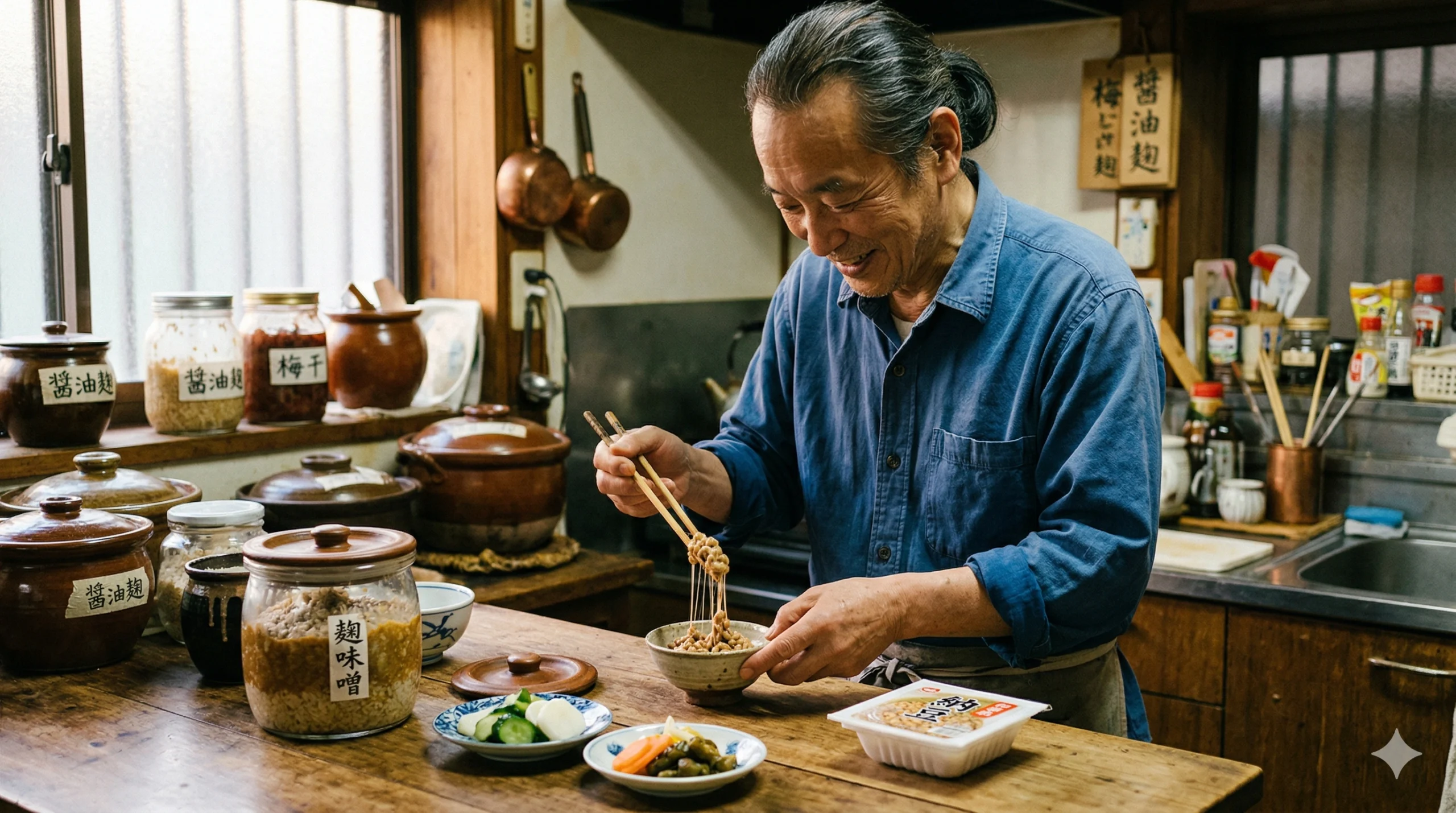
As we navigate the mid-2020s, the “Microbiome Revolution” has moved from the lab to the kitchen. We now know that our gut health dictates everything from our mood and mental clarity to our immune resilience. While yogurt and kombucha are household names, the real “super-probiotics” of 2026 are emerging from the ancient Japanese tradition of fermentation.
Specifically, two ingredients—Natto and Koji—are being hailed by nutritionists as the ultimate “bio-hacks” for a resilient digestive system.
1. Natto: The Vitamin K2 Powerhouse
Natto—fermented soybeans known for their stringy texture and pungent aroma—is perhaps Japan’s most misunderstood superfood. However, its biological profile is unmatched.
- The “Nattokinase” Enzyme: This unique enzyme is a natural blood thinner, studied extensively for its ability to dissolve blood clots and support cardiovascular health.
- Vitamin K2 (MK-7): Natto is the highest food source of Vitamin K2 in the world. This vitamin is essential for directing calcium to the bones and away from the arteries, preventing both osteoporosis and heart disease.
- The Gut Impact: The bacteria Bacillus subtilis used to ferment Natto is extremely hardy, surviving the journey through stomach acid to colonize the gut and crowd out “bad” bacteria.
2. Koji: The “Mother” of Japanese Flavor
If Natto is the powerhouse, Koji (Aspergillus oryzae) is the artist. Koji is a mold grown on rice or barley that serves as the starter for miso, sake, and soy sauce.
- Enzyme Production: Koji produces over 50 different enzymes (like amylase and protease) that “pre-digest” food, breaking down complex proteins and starches into simple amino acids and sugars.
- Bioavailability: When you eat foods fermented with Koji, your body has to do less work to absorb the nutrients. In 2026, “Koji-water” and “Shio Koji” (salt koji) are becoming popular as marinating agents that tenderize meat while adding a massive probiotic boost.
The 2026 Trend: The “Salty-Savory” Probiotic Shift
For years, the West focused on sweet probiotics (like yogurt). The 2026 trend is shifting toward savory fermentation.
- Stable Blood Sugar: Unlike dairy-based probiotics which often contain lactose or added sugars, Japanese ferments like Miso and Pickles (Tsukemono) offer gut support without the glucose spike.
- Mental Health (The Gut-Brain Axis): Modern research into the gut-brain axis suggests that the specific bacterial strains in Japanese ferments may increase the production of GABA and serotonin, directly reducing anxiety levels.
Simple Ways to Incorporate Ferments Today
You don’t need to eat a bowl of Natto every morning to see benefits.
- The “Miso-Plus” Strategy: Use Miso paste as a base for salad dressings or a glaze for roasted vegetables.
- The Shio-Koji Swap: Replace standard table salt with Shio Koji (a liquid paste) when seasoning meat or fish to infuse the food with digestive enzymes.
- Natto for Beginners: If the texture of Natto is difficult, try mixing it with a raw egg (Tamago Kake Gohan) or adding it to a spicy curry to mask the aroma while retaining the nutrients.
Conclusion: Cultivating Your Inner Garden
In 2026, we are realizing that health isn’t about “killing” germs, but about “cultivating” the right ones. By bringing Natto and Koji into your daily diet, you aren’t just eating—you are tending to the invisible garden that keeps you alive.