
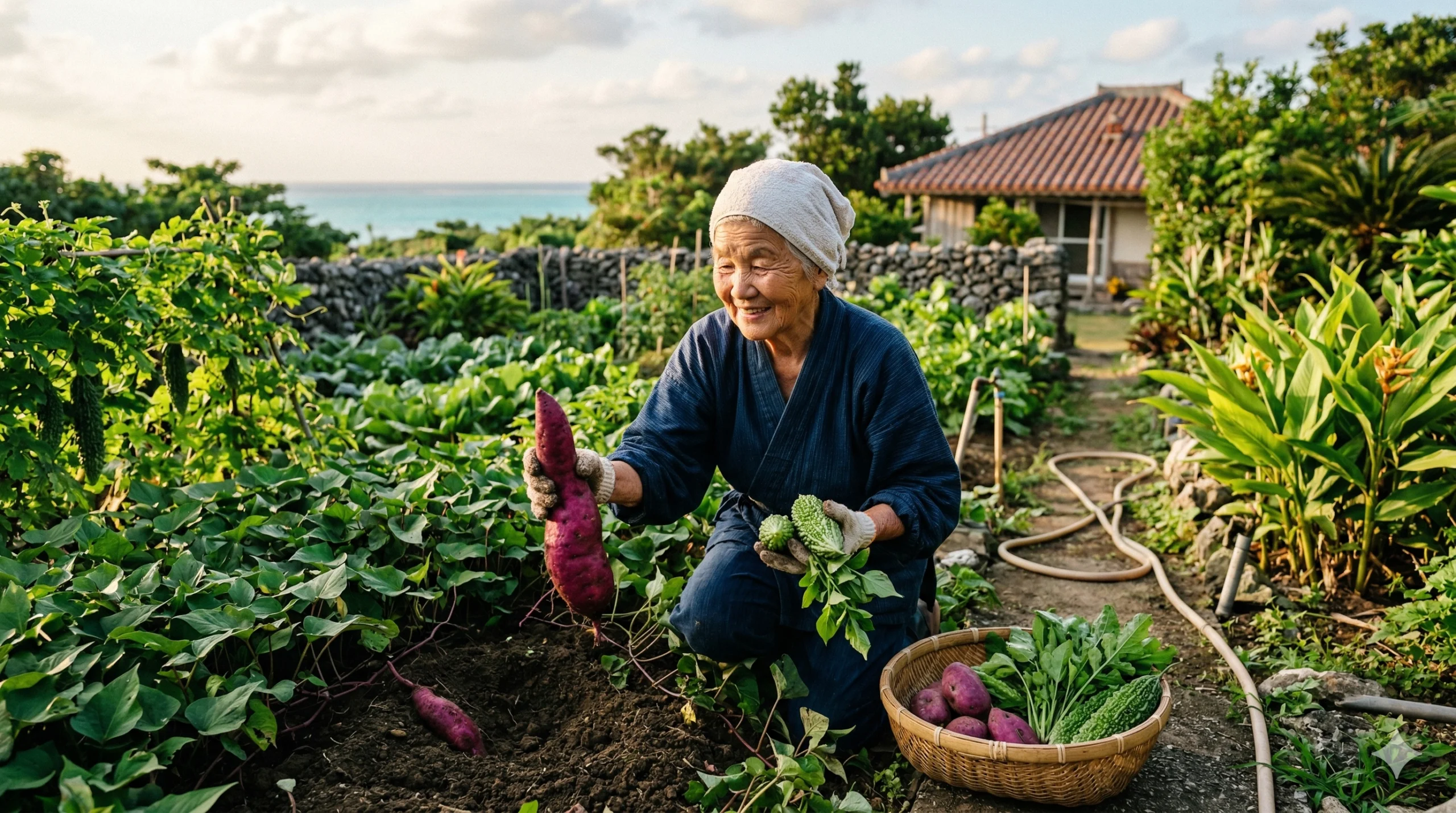
As global life expectancy faces new challenges in 2026, all eyes are on a small island chain in southern Japan: Okinawa. Known as a “Blue Zone,” Okinawa is home to one of the highest concentrations of centenarians in the world.
But their longevity isn’t just genetic luck. It is the result of a lifestyle-rooted culinary philosophy that prioritizes nutrient density over caloric volume. In a world of “superfood” fads, the Okinawan diet offers a time-tested roadmap for aging with vitality and grace.
The “Hara Hachi Bu” Rule: The Secret to Longevity
Perhaps the most famous Okinawan secret isn’t what they eat, but when they stop. Before every meal, elders often recite the phrase “Hara Hachi Bu,” a Confucian teaching that translates to “Eat until you are 80% full.”
- The Science: It takes approximately 20 minutes for the stomach to signal the brain that it is satisfied. By stopping at 80%, Okinawans prevent the metabolic stress caused by overeating and systemic inflammation—the primary driver of age-related diseases.
The Purple Powerhouse: Beni-Imo
While most of Japan relies on rice, the traditional Okinawan diet is historically built around the Beni-Imo, or purple sweet potato.
- Antioxidant Rich: These potatoes are packed with anthocyanins (the same compounds found in blueberries), which protect the brain from oxidative stress and improve cardiovascular health.
- Low Glycemic Load: Unlike white potatoes or white bread, Beni-Imo releases energy slowly, preventing the insulin spikes that contribute to Type 2 diabetes.
The Longevity Pantry: Key Ingredients
The Okinawan table features several “functional foods” that are now being studied by 2026 longevity researchers:
- Goya (Bitter Melon): Known to help regulate blood sugar and improve liver function.
- Seaweed (Mozuku): A local brown seaweed rich in fucoidan, a compound studied for its potential anti-cancer and immune-boosting properties.
- Turmeric (Ukon): Frequently consumed as a tea, this powerful anti-inflammatory is a staple in the Okinawan daily routine.
- Tofu: Okinawan tofu (Shima-tofu) is firmer and higher in protein and healthy fats than standard varieties, providing a clean alternative to animal products.
Social Longevity: The “Moai” Connection
In 2026, we recognize that “loneliness is the new smoking.” Okinawans combat this through Moai—social support groups that meet regularly to share meals and financial resources.
- The Nutritional Link: Eating in a Moai ensures that elders remain socially engaged and continue to cook healthy, varied meals rather than falling into the trap of “solo convenience eating,” which often lacks nutritional diversity.
How to Eat Like an Okinawan in 2026
You don’t have to move to the Pacific to adopt these habits:
- Prioritize Plants: Aim for a diet that is 90% plant-based, focusing on colorful tubers and leafy greens.
- Practice the 80% Rule: Use smaller plates and chew slowly to allow your satiety hormones to catch up.
- Drink Jasmine or Turmeric Tea: Replace sugary drinks with antioxidant-rich infusions.
Conclusion: Aging is an Art
The Okinawan people teach us that aging is not a process of decline, but a masterpiece of daily choices. By focusing on high-antioxidant foods and mindful consumption, we can treat our bodies not just as machines to be fueled, but as temples to be honored for a century or more.