
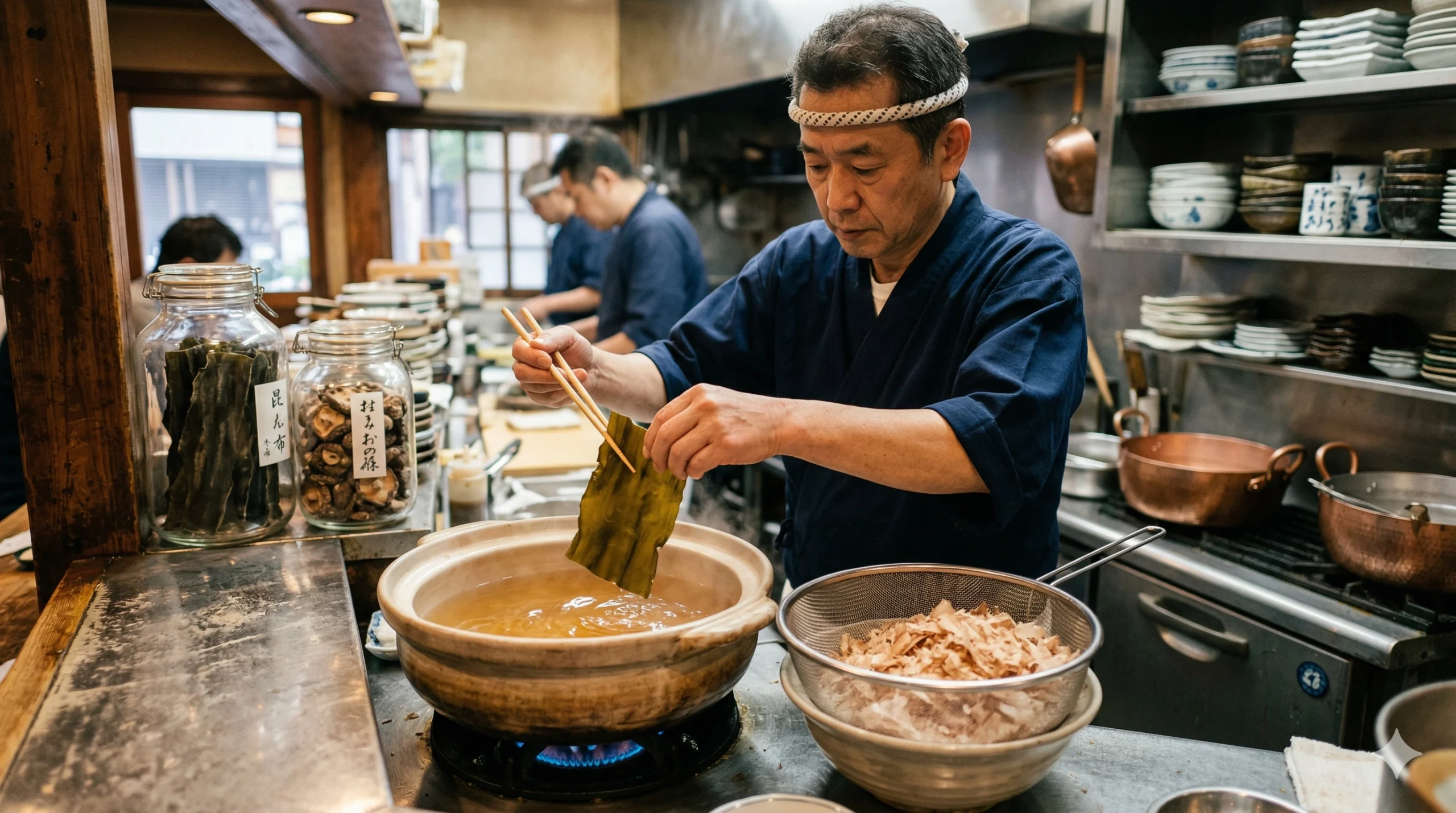
For decades, the culinary world relied on heavy doses of salt to make food “pop.” However, in 2026, a major shift toward heart-healthy eating has pushed chefs and home cooks toward a cleaner alternative: Dashi.
Dashi is the clear, savory broth that forms the backbone of Japanese cuisine. By harnessing the power of Umami (the fifth taste), Dashi allows you to reduce sodium intake by up to 30% without sacrificing a single ounce of flavor.
What is Dashi? The Three-Ingredient Miracle
While Western stocks often require hours of simmering bones and vegetables, traditional Japanese Dashi can be made in under 15 minutes using just water and a few key ingredients:
- Kombu (Dried Kelp): Rich in glutamates, providing the base “savory” note.
- Katsuobushi (Bonito Flakes): Smoked, fermented tuna flakes that add depth and a hint of the sea.
- Shiitake Mushrooms: Often used in vegan Dashi to provide an earthy, robust umami profile.
The Science: Why Umami Satisfies
Umami is the taste of glutamate, an amino acid. When glutamate hits your tongue, it signals to your brain that you are eating something protein-rich and nutritious.
- The Salt-Swap: Research shows that when food is rich in umami, the tongue perceives saltiness more intensely. This means you can use significantly less table salt while your brain still perceives the dish as perfectly seasoned.
- Metabolic Boost: Some studies suggest that the amino acids in Dashi can help stimulate the metabolism and improve the digestion of heavier foods.
2026 Trends: Dashi Beyond Japanese Food
Dashi isn’t just for Miso soup anymore. In modern kitchens, it is being used as a “secret weapon” in non-Japanese dishes:
- The “Umami Risotto”: Using Dashi instead of chicken stock for a lighter, cleaner finish.
- Savory Oatmeal: A 2026 breakfast trend involves cooking oats in Dashi and topping them with an egg for a high-protein, low-sugar start to the day.
- Dashi Butter: Mixing a concentrated Dashi reduction into butter to create an instant steak or vegetable seasoning.
How to Make “Quick Dashi” at Home
You don’t need to be a professional chef to master this.
- Place a 4-inch piece of Kombu in 4 cups of water.
- Bring to a near-boil (remove kelp just before it bubbles to avoid bitterness).
- Add a handful of Bonito flakes, let them steep for 2 minutes, then strain.
- Store in the fridge for up to 3 days to use as a base for sauces, soups, or even poaching liquids.
Conclusion: A Flavor Revolution
As we move toward a future where health and flavor must coexist, Dashi stands as the ultimate solution. It is the invisible force that makes food taste “complete.” By introducing Dashi into your kitchen, you’re not just cooking Japanese food—you’re mastering the art of the savor.