
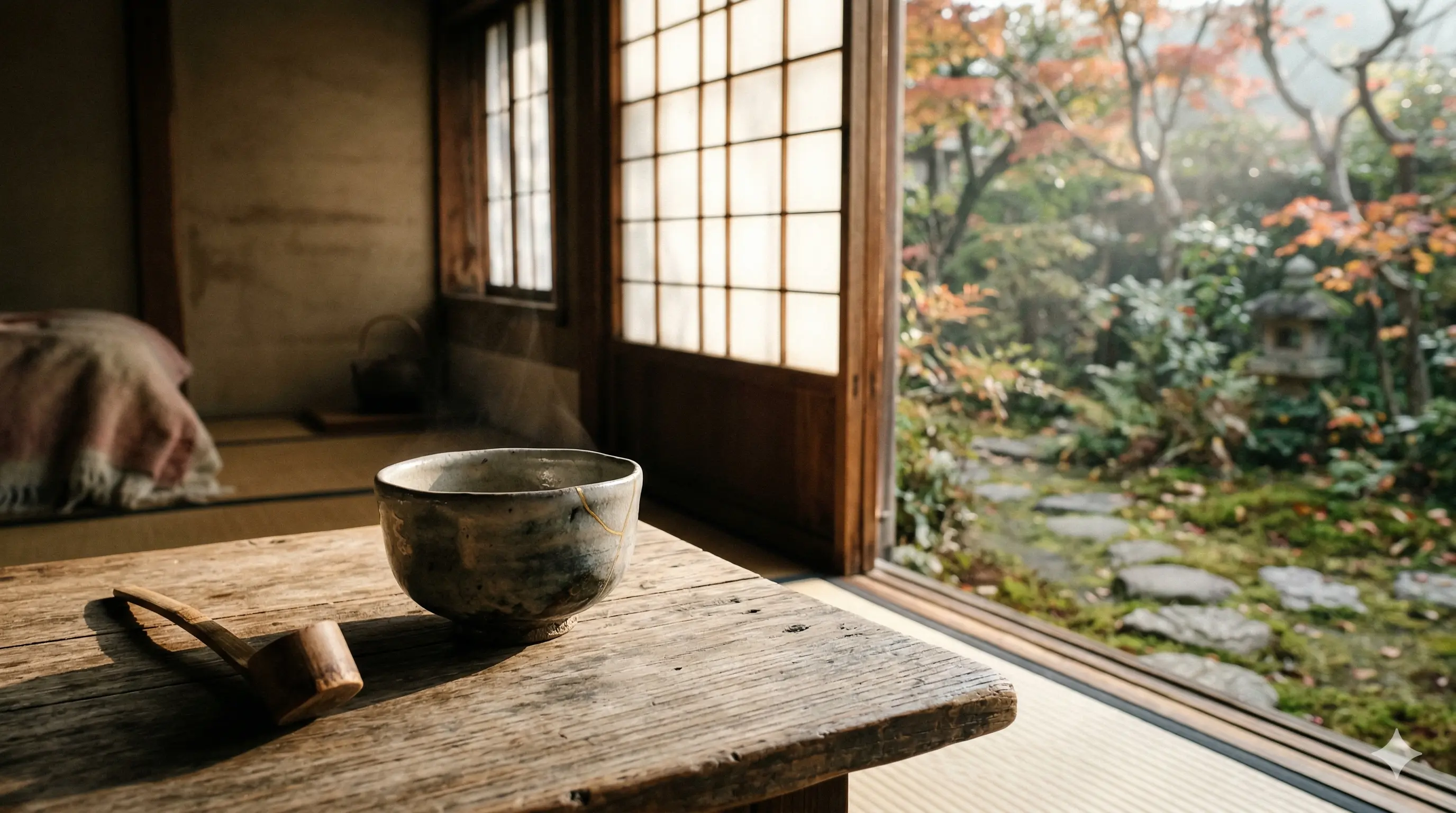
In 2026, we are living in the “Age of the Unreal.” Artificial Intelligence generates flawless faces, social media presents perfectly curated homes, and digital tools fix every mistake before it’s even made. This obsession with perfection has left us exhausted, anxious, and deeply disconnected from the real world.
The ancient Japanese philosophy of Wabi-Sabi (わびさび) is the ultimate antidote. It is the beauty of things imperfect, impermanent, and incomplete. It is the beauty of things modest and humble. By embracing Wabi-Sabi, we stop fighting against the natural wear and tear of life and start finding peace in the “messy” reality of being human.
1. Breaking Down the Concept: Wabi and Sabi
While used together, the two words offer different layers of wisdom:
- Wabi: Refers to the beauty of simplicity and living in harmony with nature. It’s about finding richness in having “less” and appreciating the unique character of handmade or natural objects.
- Sabi: Refers to the beauty that comes with age. It is the “bloom of time”—the patina on an old teapot, the cracks in a stone path, or the wrinkles on a loved one’s face.
The 2026 Core Message: Perfection is a digital illusion; imperfection is a biological truth.
2. The Mental Health Benefits of Imperfection
Why is Wabi-Sabi so critical for our minds today?
- Ending the Comparison War: When you value the “authentic” over the “perfect,” the pressure to keep up with filtered digital lives vanishes.
- Reducing Performance Anxiety: Wabi-Sabi teaches that “incomplete” is okay. Your project, your home, and your personal growth don’t need to be finished to be valuable.
- Accepting Change: By honoring Sabi (age), we learn to accept the transience of life. We stop fearing the passage of time and start respecting the wisdom and history it leaves behind.
3. Practicing Wabi-Sabi in a Modern Home
You don’t need to live in a forest hut to embrace this. In 2026, urban dwellers are practicing “Micro-Wabi-Sabi”:
- Keep the Scarred Object: Instead of throwing away a chipped mug or a worn-out wooden table, keep it. That mark is a “story” of its service to you.
- Bring Nature Indoors: Avoid plastic plants. Choose a single, slightly crooked branch or a stone from a walk. Their “imperfections” are what make them alive.
- Digital Minimalism: Allow your digital workspace to be a bit “raw.” Stop over-polishing every presentation or photo. Let the human element show through.
4. Authenticity: The Ultimate 2026 Currency
In a world full of AI-generated content, Authenticity is becoming the most valuable resource.
- The Human Signature: Your “flaws”—the slight crackle in your voice, the unique way you solve a problem, or the “errors” in your creative work—are the very things that prove you are a real human.
- Trust Building: We don’t trust perfection; we trust vulnerability. By showing your true, “Wabi-Sabi” self, you build deeper, more resilient connections with your clients, friends, and family.
Conclusion: The Peace of “Just As It Is”
Wabi-Sabi is not about being messy or lazy; it’s about being real. It reminds us that we are part of nature, and nature is never perfectly symmetrical or permanent. As we close this series in 2026, remember that you are enough—not despite your flaws, but because of them.