
Introductory sub headline

This is placeholder text which will be replaced by your content. Lorem ipsum amet elit morbi dolor tortor. Vivamus eget mollis nostra ullam corper. Pharetra torquent auctor metus felis nibh velit tellus semper taciti nostra. Semper pharetra montes habitant congue integer magnis nulla.
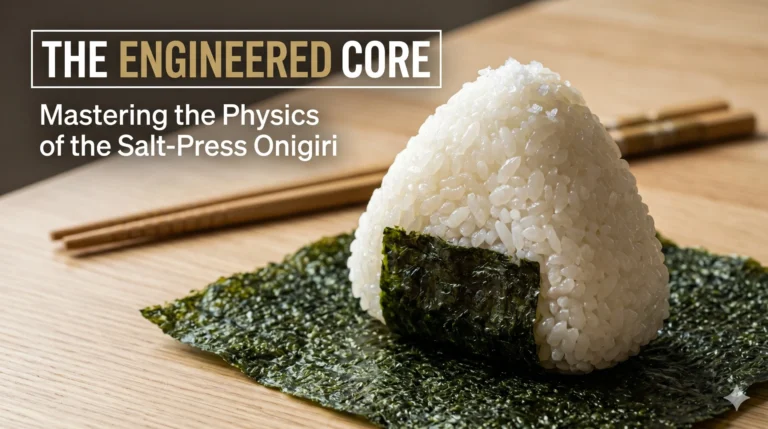
Onigiri – The Physics of the "Salt-Press" Rice Ball

April 23, 2026

Onigiri – The Physics of the “Salt-Press” Rice Ball

We conclude this technical exploration of the Japanese system with the Onigiri (rice ball). While often perceived as a simple snack,...

Read More
We conclude this technical exploration of the Japanese system with the Onigiri (rice ball). While often perceived as a simple snack, the Onigiri is a masterclass in surface tension, moisture migration, and manual compression physics. It is an engineered object designed to be stable enough for transport, yet porous enough to collapse instantly upon the first bite.To master the Onigiri, one must move beyond "squeezing" and toward the management of the interstitial air gaps between grains.Part 1: The Manual Compression – Avoiding the "Mash"The most common technical failure in Onigiri production is over-compression. If you squeeze the rice too hard, you crush the individual grains, releasing starch and turning the ball into a dense, gummy mass.The "Hand-Form" (Nigiri) Geometry: The chef uses their palms to form a triangle, but the pressure is applied only to the exterior shell.The Interstitial Air Gaps: A technically perfect Onigiri is held together by surface tension, not physical force. By keeping air pockets between the grains, the chef ensures a light mouthfeel. This structure allows the rice ball to remain cohesive during transport but "scatter" easily once it hits the palate.Part 2: The Salt-Press – Chemical and Biological StabilityUnlike sushi, which uses vinegar for preservation, Onigiri relies on the Salt-Press (Shio-musubi).The Hand-Salt Technique: Salt is applied directly to the wet palms before shaping. This serves two technical functions:Anti-Adhesion: The salt water creates a thin film that prevents the sticky starch of the rice from adhering to the chef’s skin.Surface Sterilization: Since Onigiri is often handled directly, the salt acts as a topical antimicrobial agent, reducing the biological load on the surface of the rice ball and extending its shelf life at room temperature.Part 3: The Nori Interface – Managing Moisture MigrationThe interaction between the dry Nori (seaweed) and the moist Gohan (rice) is a battle of water activity ($a_w$).The Crispness Paradox: Nori is extremely hygroscopic; it absorbs moisture from the air and the rice instantly. If wrapped too early, the Nori becomes leathery and tough.The "Separation" Engineering: Modern commercial Onigiri (like those in Japanese convenience stores) use a specialized plastic film to keep the Nori and rice separate until the exact moment of consumption. In traditional settings, the Nori is applied just before eating to ensure the cellular structure of the seaweed remains brittle, providing a sharp textural contrast to the soft, hydrated rice.Conclusion: The Final SynthesisThe Onigiri is the ultimate proof that in Washoku, even the simplest form is a product of rigorous engineering. By managing manual pressure to preserve air gaps, utilizing salt as a structural and biological tool, and controlling moisture migration between rice and seaweed, the Japanese system creates a portable meal that is a perfect balance of stability and delicacy.

April 23, 2026

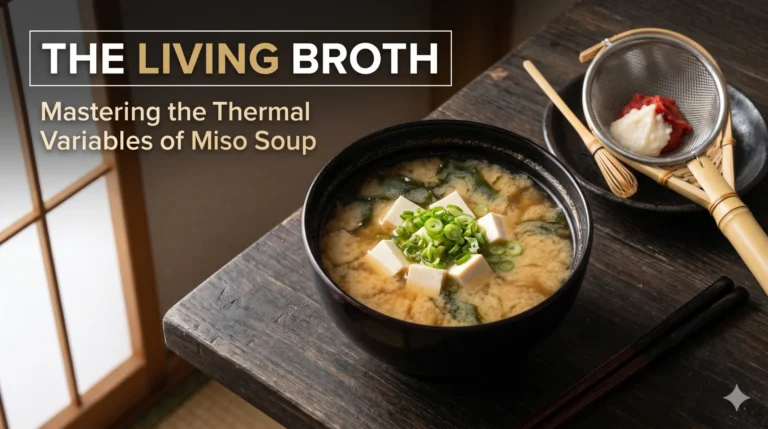
Miso Soup – The Variables of Temperature-Controlled Enzymatic Activity

While often treated as a simple side dish, Miso Soup (Misoshiru) is technically a sophisticated bio-chemical suspension. A masterfully executed Miso...

Read More
generate 16:9 ratio featured imgage for this article

April 23, 2026

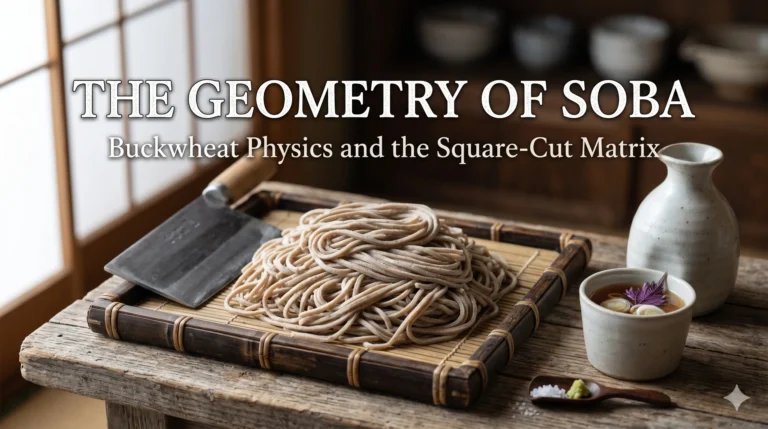
 Soba – The Physics of Buckwheat and the Geometry of the Square Cut

To conclude our technical journey through the fundamental starch and protein systems of Japan, we must analyze Soba (buckwheat noodles). While...

Read More
To conclude our technical journey through the fundamental starch and protein systems of Japan, we must analyze Soba (buckwheat noodles). While ramen relies on alkaline chemistry (Kansui) to create a springy texture, and udon relies on intensive gluten development, Soba is technically a study in particle geometry and physical density. Soba, specifically Ni-Hachi (80% buckwheat, 20% wheat), represents the ultimate structural compromise between a non-gluten flour and a required matrix.To master Soba, one must move beyond "kneading" and toward the engineering of a non-cohesive particle stack.Part 1: Buckwheat Physics – The Gluten-Free CrisisThe core technical challenge of Soba is that buckwheat is not wheat. It lacks the necessary gluten proteins (glutenin and gliadin) required to form the elastic, cohesive structure of a noodle. Pure buckwheat flour (Jyu-wari Soba) is essentially a powder that dissolves in water.The Protein Difference: Wheat contains high amounts of glutenin (providing elasticity) and gliadin (providing extensibility). Buckwheat proteins, conversely, are primarily globulins and albumins, which provide no cohesive structure when mixed with water.The Binder System: This is why most professional Soba is Ni-Hachi Soba (20% wheat binder). The chef is technically creating a standard wheat dough matrix ($20\%$), which then must physical capture and support a non-cohesive buckwheat particulate load ($80\%$). It is a particle suspension, not a gluten chain.Part 2: Uchi – The Geometry of Particle StackingBecause Soba has very little elasticity, standard dough manipulation fails. If you stretch Soba, it breaks. Instead, the Soba-ya uses geometry to achieve thickness.The Standard Geometry:Maru-me (Circle): The dough is first worked into a perfect, dense sphere to equalize density.Kaku-出し (Square-Out): The dough is not rolled thin; it is physically flattened into a perfect, thin square by folding and applying downward pressure with a Menbo (rolling pin). The Soba chef maintains this square shape with perfect, 90-degree corners. Why?Physical Folding: To achieve thickness, the thin square sheet is folded into layers. These layers are not compressed; they are physically stacked. When the final cutting occurs, the thickness of the noodle is determined purely by the physical thickness of the stacked layer, not by any physical stretching.Part 3: Kiri – The Perfect Cross-SectionThe final technical act of Soba is the Kiri (cutting). This is the reason for the square geometry of the initial sheet.The Soba-Kiri Cleaver: The Soba knife is unique: a massive, heavy, dead-straight square-faced cleaver. The weight of the knife itself provides the cutting power.The Wooden Guide (Koma-ita): The chef uses a wooden board as a precision cutting guide. Each cut is perfectly straight.The Perfect Square Cross-Section: By cutting a perfectly flat, stacked sheet with a perfectly straight, heavy blade, the resulting noodle has a precise 1mm x 1mm square cross-section. This geometry ensures that every noodle has the exact same surface area, allowing for uniform cooking times (usually 60 seconds) and, crucially, a flawless Tsuyu (dipping sauce) adhesion. If the noodle cross-section were round or uneven, the Tsuyu would slip off; the square edge provides maximum surface tension.Conclusion: The Final Starch IntegritySoba is the triumph of geometry over material failure. By recognizing that buckwheat has no internal cohesive structure, the Japanese system utilizes the strict physical stack, the square sheet, and the precision cleaver to create an engineered noodle. It is the final proof that in Washoku, if the chemistry cannot provide the desired result, the geometry will.

April 23, 2026

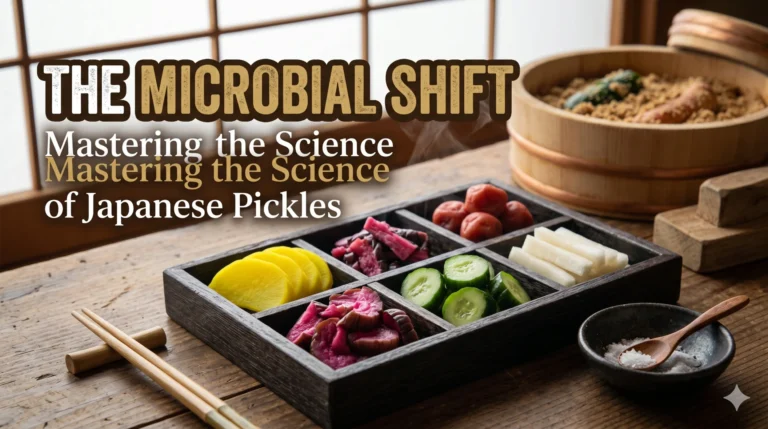
Tsukemono – The Microbial Complexity of the Salt-Cure

In the Japanese culinary system, Tsukemono (pickled things) are far more than a side dish; they are a high-precision method of...

Read More
generate 16:9 ratio featured imgage for this article

April 23, 2026

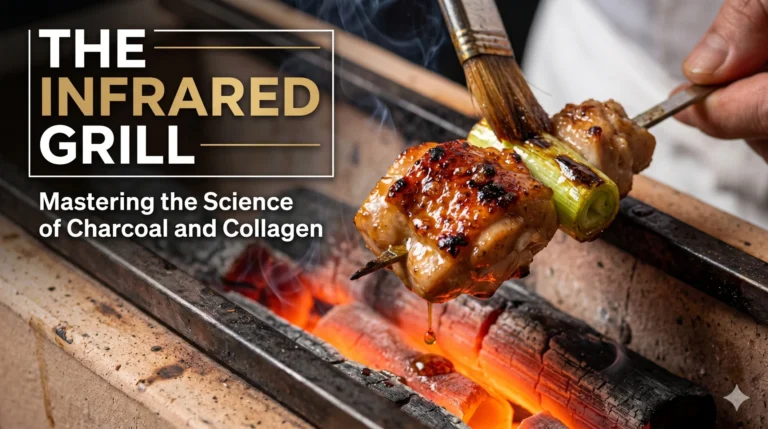
Yakitori – The Science of Infrared Heat and Collagen Management

While often categorized as “street food,” Yakitori (grilled chicken skewers) is technically a sophisticated form of high-temperature engineering. It is not...

Read More
Sake – The Masterclass of Multiple Parallel Fermentation

April 22, 2026

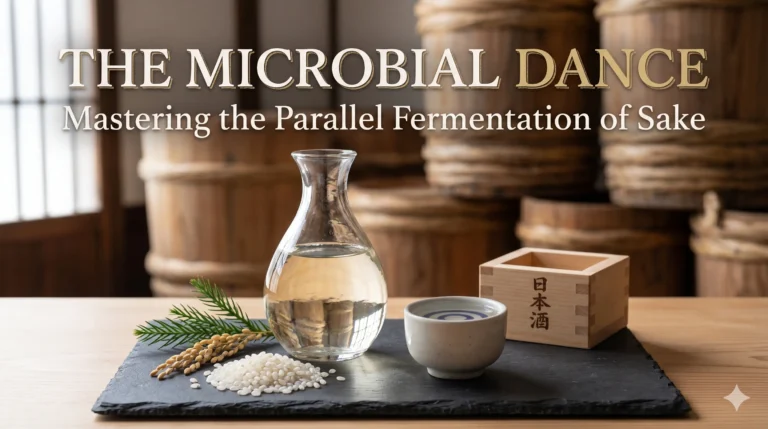
Sake – The Masterclass of Multiple Parallel Fermentation

To conclude our technical exploration of the Japanese system, we examine the beverage that is chemically and biologically inseparable from Washoku:...

Read More
generate 16:9 ratio featured imgage for this article

April 22, 2026

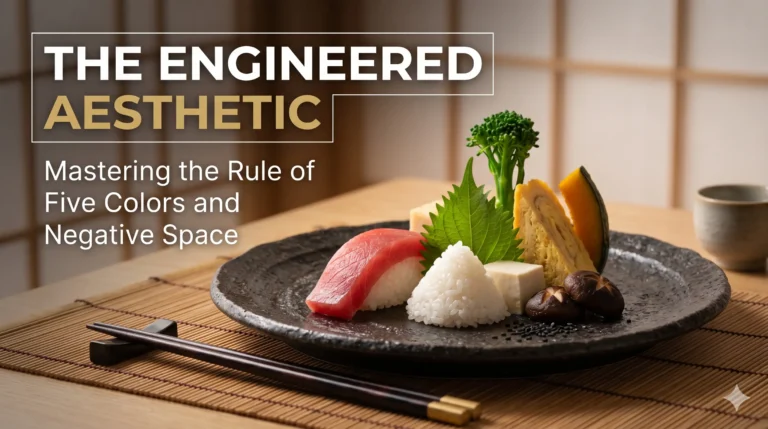
Moritsuke – The Technical Aesthetics of Plating\

In the preceding 28 articles, we have analyzed the biochemistry of umami, the physics of a single-bevel knife, and the fluid...

Read More
generate 16:9 ratio featured imgage for this article

April 22, 2026

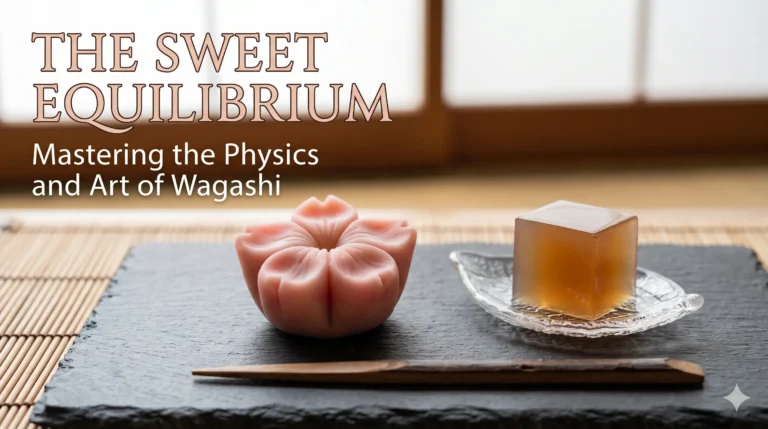
Wagashi – The Molecular Gastronomy of the Tea Sweet

While Western confectionery often relies on the structural properties of dairy fats and eggs, traditional Japanese sweets, or Wagashi, are built...

Read More
While Western confectionery often relies on the structural properties of dairy fats and eggs, traditional Japanese sweets, or Wagashi, are built on the technical manipulation of plant-based starches and proteins. Specifically, Wagashi is a masterclass in the rheology of Anko (bean paste) and the gelling physics of Agar-agar (Kanten).These sweets are not merely "desserts"; they are engineered to provide a specific sensory counterpoint to the bitterness of Matcha, requiring precise control over moisture content and crystalline structure.Part 1: The Chemistry of Anko – Protein and Sugar SaturationThe foundation of most Wagashi is Anko, a paste made from Azuki beans. Unlike a simple puree, Anko is a complex suspension of starch granules encased in bean cell walls.The Breakdown of the AzukiThe "Go-zen" vs. "Tsubu" Distinction:Tsubu-an: Coarse paste where the bean skins are left intact. This provides a heterogeneous texture and rustic mouthfeel.Koshi-an: Fine, passed through a microscopic sieve to remove all skins. This results in a smooth, homogeneous protein-starch gel.Sugar as a Structural Element: Sugar in Anko isn't just for flavor; it’s a humectant. It binds to water molecules, preventing the starch from drying out and ensuring the paste remains pliable enough to be sculpted into the delicate, lifelike shapes seen in Nerikiri.Part 2: Kanten – The Thermostable GelWhile Western jelly relies on animal-based gelatin, Wagashi uses Kanten (Agar-agar), derived from red algae. The physical properties of Kanten are fundamentally different and more technically demanding.The Thermal ParadoxHigher Melting Point: Unlike gelatin, which melts at body temperature ($35^{\circ}C$), Kanten stays solid up to $85^{\circ}C$. This means Wagashi can maintain its sharp, engineered edges even in a humid tea room.Syneresis Control: If Kanten is not boiled correctly with the right sugar concentration, it will "weep" water—a process called syneresis. A master must balance the $pH$ and sugar levels to ensure the gel remains crystal clear and holds its internal moisture perfectly.Part 3: Nerikiri – The Sculptural EngineeringNerikiri is the pinnacle of Wagashi technique, often shaped into seasonal symbols like cherry blossoms or maple leaves.The Mochi-An Hybrid: It is a mixture of Shiro-an (white bean paste) and a small amount of Gyuhi (sweetened glutinous rice flour).The Pliability Factor: Adding the rice starch (Gyuhi) introduces elasticity to the crumbly bean paste. This creates a "culinary clay" that can be manipulated with specialized wooden tools without cracking.The Sensory Buffer: Because Matcha is high in tannins and acidity, Nerikiri is engineered with high sugar density. When eaten before the tea, the sugar coats the tongue, chemically "buffering" the palate so the tea’s umami and sweetness are highlighted rather than its bitterness.Conclusion: Engineering the Seasonal MomentWagashi is the intersection of botany, chemistry, and sculpture. It demonstrates that with just beans, rice, and seaweed, the Japanese craftsman can engineer a world of textures—from the firm, glass-like clarity of Yokan to the soft, velvet pliability of Nerikiri. It is the final, sweet proof that in Washoku, every ingredient is a tool to be mastered.

April 22, 2026

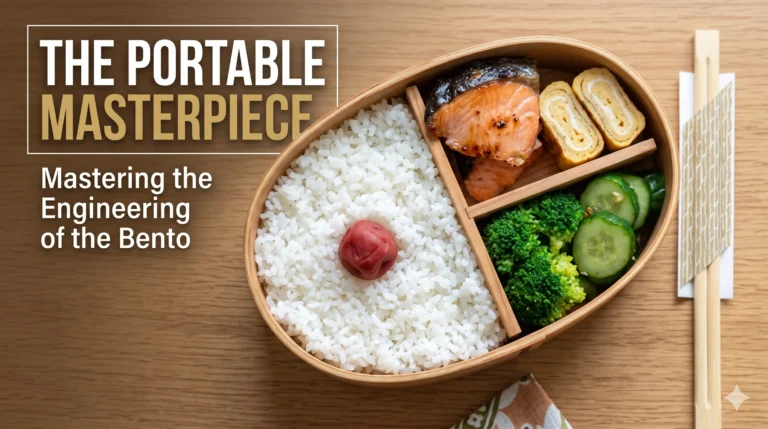
The Art of the Bento – The Engineering of Portability

While many view the Bento as a simple lunchbox, it is technically an exercise in structural stability, moisture management, and food...

Read More
generate 16:9 ratio featured imgage for this article

April 22, 2026

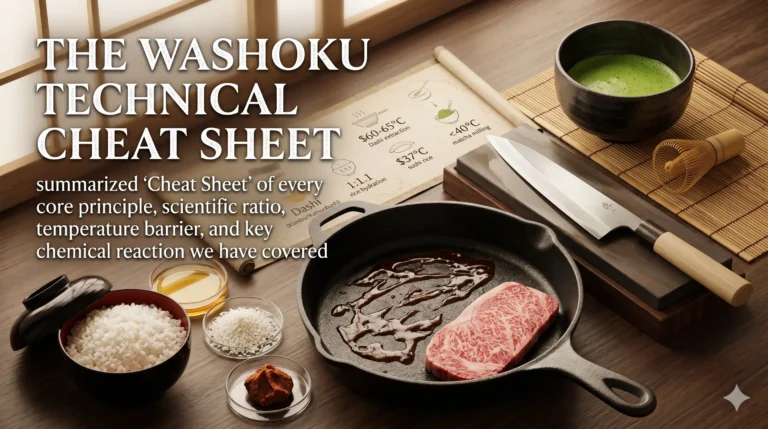
The Summarized Technical Cheat Sheet of Washoku Principles

Congratulations! You have completed the 25-part masterclass in Japanese culinary science. From the geometry of the rinse to the forced emulsion...

Read More
Back Next

Sign up for our email list

This is placeholder text which will be replaced by your content.

Email Address

Sign Up

*Replace this mock form with your preferred form plugin